
Managing a growing team sounds simple until customer demand increases, employees work different shifts, workloads change throughout the day, and managers have to answer questions like:
- 1 What Is Workforce Management?
- 2 Why Is Workforce Management Important?
- 3 How Does Workforce Management Work?
- 4 Core Functions of Workforce Management
- 5 What Is Schedule Adherence in WFM?
- 6 Benefits of Workforce Management
- 7 Common Workforce Management Challenges
- 8 Important Workforce Management Metrics
- 9 How to Implement Workforce Management
- 10 How CallerDesk Can Support Workforce Management for Calling Teams
- 11 Conclusion
Do we have enough people available right now?
Are employees being used efficiently?
Which hours are the busiest?
Who needs additional training?
Are customers waiting because we are understaffed?
Are some employees overloaded while others have too little work?
This is where workforce management (WFM) becomes important.
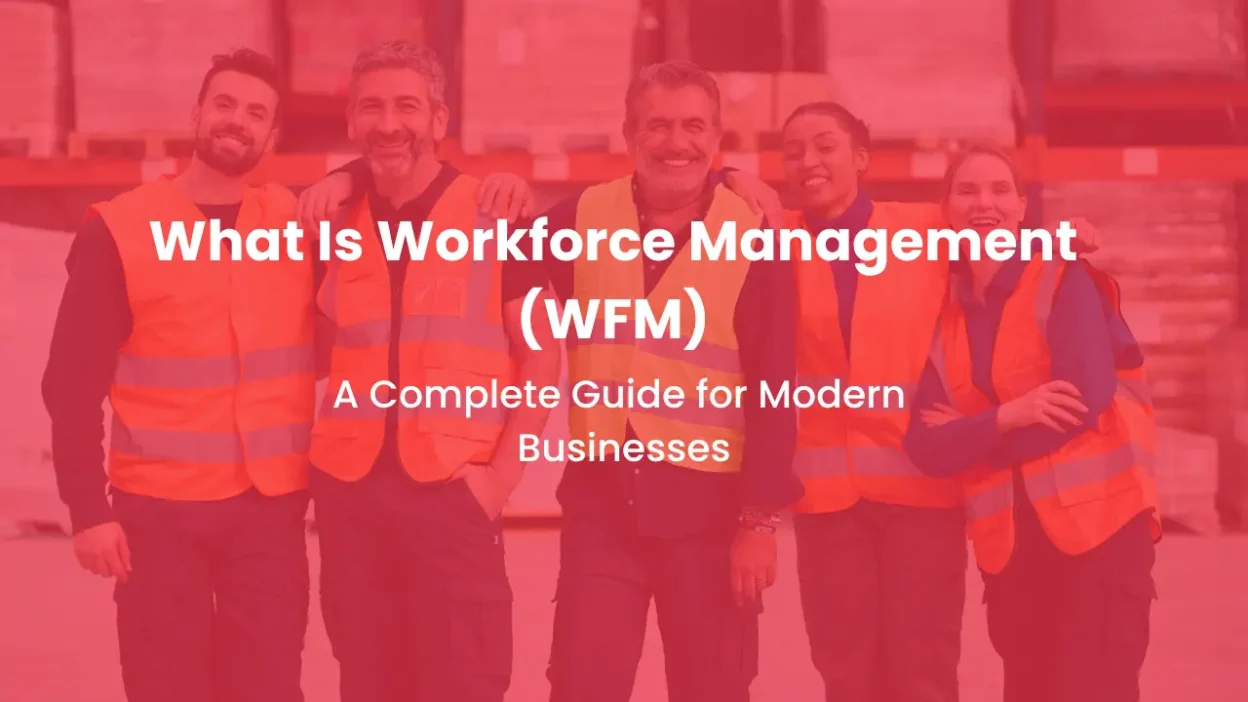
Workforce management is the process of planning, scheduling, tracking, and managing employees so that the right number of people with the right skills are available at the right time.
For call centers, customer support teams, sales teams, and other customer-facing businesses, good WFM can improve productivity, control operating costs, and help maintain service quality.
In this guide, we will explain workforce management in simple terms, including how WFM works, its key functions, benefits, important metrics, software features, and its role in call center operations.
What Is Workforce Management?
Workforce management, commonly called WFM, is a set of processes businesses use to make sure they have the right people, with the right skills, working at the right time to meet business demand efficiently.
Instead of simply asking how many employees a company has, workforce management asks a more useful question:
Do we have enough people available when the workload is highest?
For example, imagine a customer support center receives most of its calls between 10 AM and 2 PM.
Having 30 agents working in the evening but only 10 agents available during this peak period would create a staffing problem.
Customers may wait longer, agents may become overloaded, and some calls may be missed.
A workforce management process uses historical demand, employee availability, schedules, skills, attendance, and performance data to reduce problems like these.
In simple words:
Workforce management helps businesses match employee availability with actual workload.
Why Is Workforce Management Important?
Having more employees does not automatically mean better performance.
A company can have a large team and still struggle if employees are not available when demand is highest.
The opposite can also happen.
A business might schedule too many employees during quiet periods, creating unnecessary costs and idle time.
Effective workforce management helps businesses balance both situations.
The goal is to provide enough workforce capacity to handle customer demand without consistently overstaffing or overworking employees.
That balance can directly affect:
- Customer experience
- Employee productivity
- Operating costs
- Response times
- Workload distribution
- Overall team performance
How Does Workforce Management Work?
Workforce management works as a continuous cycle.
A typical WFM process looks like this:
Forecast demand → Calculate staffing needs → Schedule employees → Monitor activity → Adjust resources → Analyze results → Improve future planning
For example, historical call data may show that Monday mornings consistently receive more customer calls.
Managers can use this information to schedule more agents during those hours.
During the shift, real-time reporting can show whether actual call volume matches expectations.
If demand suddenly increases, managers may need to adjust agent allocation.
Afterward, performance data can help improve the next staffing plan.
This continuous cycle is what makes workforce management more effective than simply preparing a weekly schedule.
Core Functions of Workforce Management
A complete WFM strategy usually includes several connected activities.
1. Workforce Forecasting
Forecasting helps businesses estimate how much work they are likely to receive.
A forecast may consider:
- Historical workload
- Call volume
- Time of day
- Day of the week
- Seasonal trends
- Marketing campaigns
- Holidays
- Product launches
- Business growth
For example, if historical data shows that customer calls increase significantly during a sale period, managers can prepare additional staffing before demand increases.
Better forecasting helps businesses make staffing decisions based on actual patterns instead of assumptions.
2. Capacity Planning
Once demand is estimated, businesses need to determine how much workforce capacity is required.
This is called capacity planning.
Suppose a call center expects a high number of calls on Monday.
Managers may also need to consider:
- Average call duration
- Employee breaks
- Shift timings
- Absenteeism
- Agent availability
- Service targets
- Agent skills
Capacity planning helps answer:
How many employees do we actually need to handle the expected workload?
3. Employee Scheduling
After calculating staffing requirements, employees need to be scheduled.
Effective scheduling should consider:
- Expected workload
- Employee availability
- Skills
- Shift timings
- Breaks
- Leave
- Operational requirements
For example, if customers requiring a particular language or skill usually call during certain hours, managers should ensure suitable agents are available during that period.
Good scheduling is therefore not only about having enough employees.
It is also about having the right employees available at the right time.
4. Time, Attendance, and Availability
Even a well-designed schedule is useful only if employees are actually available when expected.
Workforce management can help businesses track:
- Login and logout times
- Attendance
- Absence
- Break duration
- Overtime
- Employee availability
For example, a manager may schedule 20 agents during a peak period.
But if only 15 agents are actually available, the real workforce capacity is very different from the planned capacity.
Tracking planned versus actual availability helps managers identify such gaps.
5. Real-Time Workforce Management
Forecasting shows what you expected to happen.
Real-time workforce management shows what is happening now.
This is especially important in call centers.
Imagine a company expects 500 calls during a particular hour, but an unexpected issue causes 800 customers to call.
The original staffing plan may no longer be sufficient.
Real-time visibility helps managers identify:
- Increasing call volume
- Longer queues
- Reduced agent availability
- Higher missed-call levels
- Sudden workload changes
Managers can then respond by reallocating resources or adjusting operational priorities.
6. Performance Monitoring
Workforce management is not only about how many employees are available.
It is also about how effectively available employees are working.
For calling teams, managers may analyze:
- Calls handled
- Connected calls
- Missed calls
- Call duration
- Talk time
- Agent availability
- Break duration
- Call outcomes
This information can help identify productivity issues, workload imbalance, coaching requirements, and operational problems.
The objective should not simply be employee monitoring.
Workforce data should help managers improve processes and support better team performance.
7. Workforce Analytics and Reporting
Workforce analytics helps managers understand patterns in employee and operational data.
For example:
A manager may notice missed calls increasing during lunch hours.
Another team may discover that customer calls consistently peak at a specific time.
A sales manager may identify large differences in call activity between agents.
A support manager may discover that one shift produces better results than another.
These insights help managers make better workforce decisions instead of relying only on assumptions.
What Is Schedule Adherence in WFM?
Schedule adherence measures how closely an employee’s actual working activity follows the planned schedule.
In a call center, it can include whether agents:
- Log in on time
- Remain available during assigned hours
- Take scheduled breaks
- Return from breaks as expected
- Follow planned working periods
Schedule adherence matters because workforce forecasting works only when the expected number of employees are actually available.
However, adherence should always be considered with context.
An employee may spend longer than expected on a customer call, attend training, face a system issue, or handle another legitimate task.
Managers should therefore use schedule adherence as an operational indicator rather than judging performance from one metric alone.
Benefits of Workforce Management
A strong WFM strategy can create several operational benefits.
1. Better Staffing Decisions
Managers can use workload data and historical trends to decide how many employees are needed during different periods.
2. Higher Employee Productivity
Better scheduling and resource allocation can reduce unnecessary idle time and workload imbalance.
3. Better Customer Experience
When enough employees are available during peak periods, customers can receive faster responses and experience shorter waiting times.
4. Lower Operational Costs
Better workforce planning can help reduce unnecessary overtime, overstaffing, and inefficient workforce allocation.
5. Better Workforce Visibility
Managers can get a clearer view of employee availability, attendance, workload, and performance.
6. Faster Decision-Making
Real-time information allows managers to respond to workforce problems before they become bigger operational issues.
7. Balanced Workloads
Managers can identify situations where some employees are overloaded while others have unused capacity.
Common Workforce Management Challenges
Workforce management can also create challenges.
1. Inaccurate Forecasting
Historical data cannot predict every unexpected event.
Sudden customer demand, technical issues, or campaigns can create workload that was not included in the original forecast.
2. Fragmented Data
If schedules, attendance, calls, and performance are stored in different systems, managers may struggle to understand the full picture.
3. Manual Scheduling
Manual workforce scheduling becomes increasingly difficult as the team grows and more shifts, skills, breaks, and availability rules need to be considered.
4. Unexpected Absence
Even a strong workforce plan can be affected by unplanned employee absence.
5. Lack of Real-Time Visibility
If managers only receive reports at the end of the day, they may discover staffing problems after customers have already experienced delays or missed calls.
This is why effective WFM should combine historical planning with real-time operational information.
Important Workforce Management Metrics
The exact metrics a business needs depend on its operations.
For call centers and calling teams, common WFM metrics include:
| Metric | What It Helps Measure |
| Forecast accuracy | Difference between expected and actual workload |
| Schedule adherence | How closely employees follow planned schedules |
| Attendance | Whether planned employees were available |
| Absenteeism | Workforce capacity lost because of absence |
| Overtime | Additional employee hours required |
| Utilization | How much available workforce capacity is being used |
| Occupancy | How much agent time is spent handling customer work |
| Average handling time | Average time required to handle an interaction |
| Service level | Ability to answer customer interactions within a target |
| Call abandonment | Customers who disconnect before reaching an agent |
| Calls handled | Number of calls successfully handled |
| Missed calls | Calls that were not answered |
Businesses should avoid evaluating workforce performance using only one number.
For example, reducing average handling time may appear positive, but forcing agents to complete calls too quickly can hurt customer experience.
WFM metrics are most useful when they are analyzed together.
How to Implement Workforce Management
A simple WFM implementation can follow these steps.
Step 1: Identify the Workforce Problem
Start by understanding what needs improvement.
It may be:
- Too many missed calls
- Poor staffing during peak hours
- High overtime
- Uneven workloads
- Lack of attendance visibility
- Limited agent-performance data
Step 2: Collect Historical Data
Analyze information such as:
- Call volume
- Employee availability
- Attendance
- Shift schedules
- Missed calls
- Call duration
- Performance metrics
Step 3: Forecast Demand
Identify workload patterns and estimate future staffing requirements.
Step 4: Calculate Staffing Needs
Determine how many employees and which skills are required during different periods.
Step 5: Create Better Schedules
Build schedules according to forecasted demand and employee availability.
Step 6: Monitor Real-Time Activity
Compare planned workforce levels with what is actually happening during the day.
Step 7: Adjust Resources
Make operational changes if call volume, employee availability, or customer demand changes unexpectedly.
Step 8: Review Performance
Compare planned and actual results.
Step 9: Improve Future Workforce Plans
Use historical results to improve the next forecast and schedule.
This turns WFM into a continuous improvement process rather than a one-time activity.
How CallerDesk Can Support Workforce Management for Calling Teams
For calling teams, workforce management becomes more effective when managers have clear visibility into agent activity and customer call patterns.
This is where CallerDesk can support important parts of a broader workforce management process.
With CallerDesk, managers can get better visibility into calling operations through features such as:
1. Agent-Level Reporting
CallerDesk’s reporting capabilities can help managers review information such as:
- Incoming calls
- Outgoing calls
- Connected calls
- Missed calls
- Call duration
- Agent activity
This can help managers understand how individuals and teams are performing.
2. Real-Time Reporting
Historical reports explain what happened.
Real-time information helps managers understand what is happening right now.
This can help managers identify sudden increases in workload or changes in agent activity.
3. Live Call Monitoring
Authorized supervisors can monitor active calls to understand service quality and identify coaching opportunities.
4. Skill-Based Routing
Skill-based routing can help connect customers with agents who are more suitable for their requirements.
This can improve workforce allocation by ensuring available employee skills are used more effectively.
5. Better Operational Visibility
When call information, agent activity, and reporting are easier to access, managers can make better decisions about resource allocation, workload management, and team performance.
CallerDesk does not replace every HR, payroll, or dedicated workforce scheduling system.
Instead, it can support an important part of workforce management for calling teams by providing better visibility into call activity and agent performance.
Conclusion
Workforce management is much more than preparing employee schedules.
It is a continuous process of forecasting workload, understanding workforce requirements, scheduling employees, monitoring actual activity, measuring performance, and using data to improve future decisions.
For call centers and customer-facing teams, this becomes especially important because customer demand can change throughout the day.
Without enough operational visibility, managers may discover workforce problems only after calls have already been missed or customers have already waited too long.
A strong workforce management process helps businesses move from reactive staffing decisions to more informed and data-driven workforce planning.
For calling teams, real-time call reporting, agent-level analytics, live monitoring, and skill-based routing can provide additional visibility that supports better workforce decisions.
Want better visibility into your calling team’s performance?
CallerDesk helps businesses manage customer conversations with cloud calling, agent-level reporting, real-time insights, intelligent call routing, and monitoring capabilities.
Start a free trial or schedule a CallerDesk demo to see how better call visibility can help your team operate more efficiently.