
Summary-
Most call center problems don’t start during the conversation. They start the moment the call is sent to the wrong place. One wrong transfer, and everything slows down. ACD helps by keeping calls moving in an orderly way, queues stay clean, agents aren’t overloaded, and nothing feels chaotic. Skill-based routing fixes the next problem by making sure the call reaches someone who actually knows how to handle it.
When these two work together, calls stop bouncing between people. Customers get answers faster, and agents don’t feel stuck handling things outside their comfort zone. The article also covers simple habits—like using IVR properly and updating agent skills that keep cloud call centers running smoothly as they grow.
Introduction-
Call handling problems rarely start with agents. Most of the time, the issue begins much earlier at the point where calls are routed. When customers reach the wrong agent, support slows down. Transfers increase. Agents feel pressured. Customers lose patience.
This is why modern Call Centers rely on smarter routing logic rather than basic call queues. Two systems play a key role here: Automatic Call Distribution (ACD) and skill-based routing. On their own, each solves part of the problem. When combined, they create a structured and intelligent call flow that improves both efficiency and customer experience.
Whether a team operates from a traditional setup or runs fully on cloud call centers, this combination helps ensure calls reach the right place without delay or confusion.
Understanding the Basics: What Is Automatic Call Distribution (ACD)?
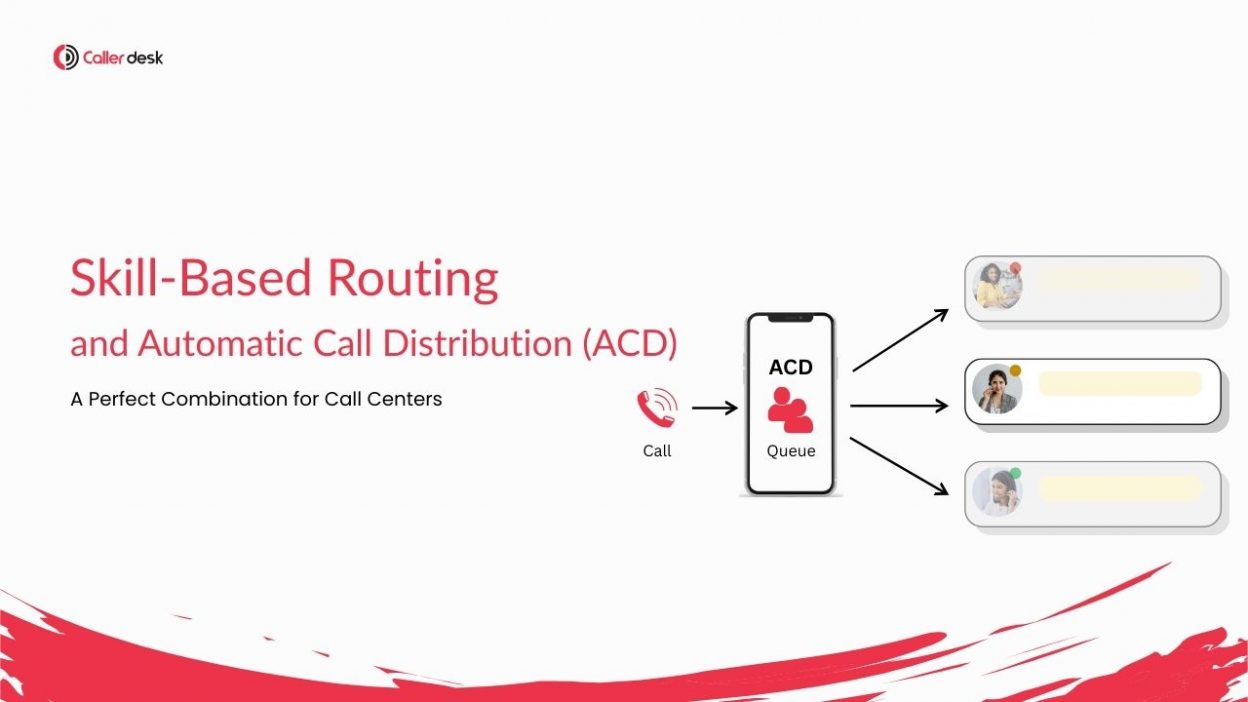
Automatic Call Distribution, or ACD, is responsible for managing how incoming calls enter and move through a call queue. Its primary role is to distribute calls in an orderly and predictable way.
ACD typically routes calls based on:
- Agent availability
- Queue order
- Call volume
- Time of day
- Department selection
In simple terms, ACD prevents chaos. It makes sure calls are answered fairly, queues stay balanced, and no single agent is overloaded. For most Call Centers, ACD is the foundation of call management.
However, ACD alone does not decide who is best to handle a call. It only decides who is next.
What Is Skill-Based Routing?
Skill-based routing adds intelligence on top of ACD. Instead of routing calls purely based on availability, it considers what the call actually needs.
With skill-based routing, calls are matched to agents based on:
- Product or service expertise
- Technical capability
- Language proficiency
- Problem-solving ability
- Soft skills like empathy or negotiation
In modern cloud call centers, these skills are tagged inside the system and used automatically. This ensures calls are not just answered quickly, but answered correctly.
Why ACD and Skill-Based Routing Work Best Together
ACD and skill-based routing solve different problems. When combined, they remove gaps that exist when either system works alone.
1. Faster and More Accurate Call Routing
ACD ensures calls are placed into the right queue without delay. Skill-based routing then ensures the call reaches an agent who can actually handle the issue.
This reduces:
- Incorrect routing
- Multiple transfers
- Time spent re-explaining issues
The result is smoother call flow from the first interaction.
2. Better First-Call Resolution (FCR)
First-call resolution improves when customers reach capable agents early. ACD helps manage call volume, while skill-based routing ensures expertise is applied where it matters.
Higher FCR leads to:
- Shorter calls
- Fewer repeat interactions
- Lower agent workload
This balance is especially valuable in high-volume Call Centers.
3. More Balanced Agent Workload
ACD distributes calls evenly so no agent is overwhelmed. Skill-based routing ensures agents only receive calls they are trained to handle.
Together, they:
- Reduce agent stress
- Improve focus
- Prevent burnout
Agents perform better when calls match their strengths.
4. A Smoother Customer Experience
From the customer’s perspective, the experience feels simple. Calls connect faster. Transfers are minimal. Conversations feel more confident and informed.
This combination removes the common frustrations of:
- Long hold times
- Being passed between agents
- Repeating the same information
Support feels structured rather than rushed.
5. Cleaner Operations for Call Centers
When ACD and skill-based routing work together, internal operations become easier to manage.
Benefits include:
- Better queue visibility
- Priority handling for key customers
- Lower call abandonment
- Smarter use of agent skills
This structure is especially useful for cloud call centers handling mixed query types.
6. Easy Scalability as Teams Grow
As teams expand, routing logic must evolve. Modern cloud call centers allow skills, queues, and ACD rules to be updated without disrupting live operations.
New agents, new services, or seasonal call spikes can be handled without rebuilding the system from scratch.
How to Integrate ACD and Skill-Based Routing Effectively
1. Identify the Skills Your Call Center Needs
Start by reviewing the types of calls your team handles daily. Common skill groups include:
- Technical support
- Billing and payments
- Sales inquiries
- Language support
- Retention or cancellations
Assign agents based on real capability, not assumptions.
2. Configure ACD Rules First
Set up ACD as the base layer:
- Department-wise queues
- Priority queues for important customers
- Load balancing rules
- Time-based routing for shifts
This ensures calls are distributed logically before skills are applied.
3. Apply Skill-Based Routing on Top of ACD
Once calls enter the correct queue, skill-based routing takes over.
Example:
A technical support call enters the tech queue via ACD → skill-based routing connects it to an agent trained for advanced troubleshooting.
This layered approach ensures both speed and accuracy.
4. Use IVR to Support Routing Decisions
IVR menus should guide callers clearly:
- Billing
- Technical issues
- New customers
- Order or service status
Clear IVR paths strengthen both ACD and skill-based routing.
5. Keep Agent Skills Updated
Skills change over time. Products evolve. Agents grow.
Regular training and skill reviews ensure routing stays accurate and effective.
6. Monitor Performance and Fine-Tune Rules
Track key metrics such as:
- First-call resolution
- Average handling time
- Call transfers
- Agent performance
- Customer satisfaction
Modern cloud call centers provide dashboards to make this process continuous.
7. Stay Flexible as Needs Change
Routing rules should never be static. Review them regularly and adjust as call patterns shift or teams expand.
Conclusion–
Automatic Call Distribution creates order. Skill-based routing adds intelligence. Together, they form a call handling system that is efficient, scalable, and customer-focused.
For Call Centers aiming to improve resolution speed, agent productivity, and customer satisfaction, this combination delivers consistent results—especially within modern cloud call centers.
If you’re looking to implement smarter routing with minimal complexity, explore how CallerDesk supports ACD and skill-based routing in a single, unified platform.
Visit callerdesk.io to get started.