
Summary-
- 1 Summary-
- 2 Introduction-
- 3 Understanding Multi-Channel Routing in Simple Terms
- 4 Why Traditional Channel Handling No Longer Works
- 5 Benefit 1: Faster Response Without Rushing Agents
- 6 Benefit 2: Clear Workflows for Support Teams
- 7 Benefit 3: Even Distribution of Customer Queries
- 8 Benefit 4: Better Context in Every Interaction
- 9 Benefit 5: Improved Monitoring and Reporting
- 10 Benefit 6: Easy Scalability With Growing Demand
- 11 Benefit 7: Fewer Missed Calls and Messages
- 12 Benefit 8: Stronger Cloud Telephony Integration
- 13 Benefit 9: Consistent Service Across Channels
- 14 How CallerDesk Fits Into This Workflow
- 15 Conclusion-
When messages start coming in from different places, it usually doesn’t feel like a big problem at first. A reply gets delayed here, a follow-up slips there. Someone realises later that the customer has already explained the same issue twice. Calls sit in one tool, emails in another, chats somewhere else, and the team keeps hopping between them.
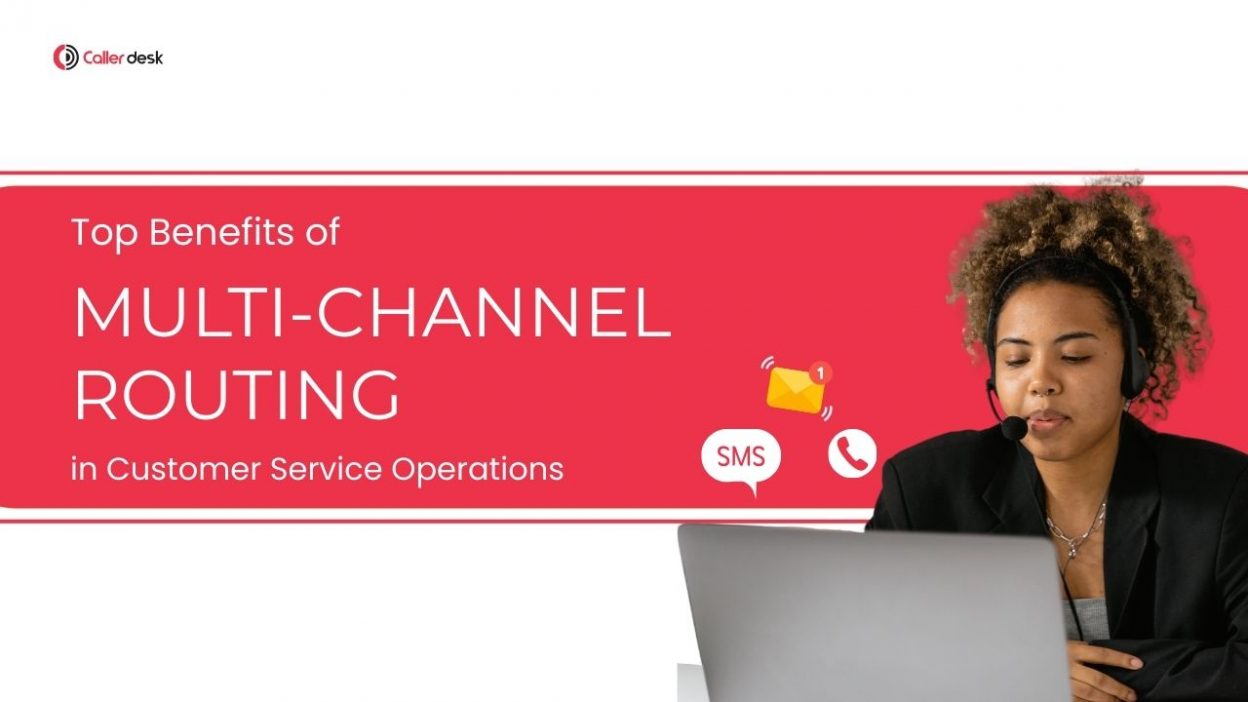
That’s where multi-channel routing starts to help. It pulls all these requests into one place and quietly keeps things moving in the right direction. Agents don’t have to guess what to handle next, managers can spot delays early, and customers aren’t left wondering if anyone is even looking at their message. This article explains how that structure helps teams stay steady as volumes increase, especially when cloud telephony is part of the setup.
Introduction-
Customer conversations no longer happen on a single channel. Some customers prefer calling. Others send emails, chat on a website, or message through social platforms. When these conversations are handled in isolation, service teams struggle to keep track. Delays increase, messages get missed, and customers feel ignored.
This is why Multi-Channel Routing has become essential for structured Customer Service Operations. It helps businesses bring all incoming queries into one controlled system and route them intelligently. Support teams work with clarity instead of chaos. Customers receive timely responses without repeating themselves. When implemented with Cloud Telephony, routing becomes faster, more reliable, and easier to manage at scale.
Understanding Multi-Channel Routing in Simple Terms
Multi-Channel Routing is the process of directing customer queries from different communication channels into a unified support workflow. These channels can include phone calls, emails, live chat, WhatsApp, and web forms.
Instead of agents manually checking each platform, the system routes every interaction automatically. Calls move into call queues. Messages appear in assigned inboxes. Chats are distributed based on availability.
For Customer Service Operations, this removes guesswork. Everything follows a defined flow. No message is left unseen. No call gets lost. In a Cloud Telephony setup, routing works alongside call management, IVR, and CRM tools to create a complete service environment.
Why Traditional Channel Handling No Longer Works
Handling each channel separately may seem manageable at low volumes. But as customer interactions grow, the cracks start showing.
Common issues include:
- Calls answered faster than emails, creating uneven service
- Chat messages waiting while agents are busy on calls
- No clear visibility into pending conversations
- Agents switching between tools and losing context
Multi-Channel Routing solves these issues by treating every customer query as part of one system. This structured approach keeps Customer Service predictable and controlled, even during peak hours.
Benefit 1: Faster Response Without Rushing Agents
Speed matters in Customer Service Operations, but speed without structure leads to mistakes. Multi-Channel Routing improves response time without forcing agents to multitask blindly.
Each interaction is routed automatically. Agents receive one request at a time, based on availability or queue rules. Calls are picked up faster. Messages are responded to without unnecessary delays.
This balance between speed and focus helps teams stay efficient while maintaining response quality across all channels.
Benefit 2: Clear Workflows for Support Teams
When agents know exactly where queries come from and where they should go, work becomes easier. Multi-Channel Routing removes confusion caused by scattered inboxes and separate tools.
Agents log in to one system. They handle what is assigned. They move on to the next task.
This clarity improves daily Customer Service routines. New agents adapt faster. Experienced agents stay productive without burnout.
Benefit 3: Even Distribution of Customer Queries
In many support teams, workload imbalance is a silent problem. A few agents get overwhelmed while others wait for tasks.
With Multi-Channel Routing, interactions are shared evenly. The system checks availability and routes queries accordingly. No agent is overloaded. No customer waits unnecessarily.
Balanced workloads improve morale and maintain consistency across Customer Service Operations.
Benefit 4: Better Context in Every Interaction
Customers dislike repeating the same issue multiple times. Without a unified system, agents often lack context.
Multi-Channel Routing keeps conversations connected. When a chat follows a call or an email follows a missed call, agents can see the history. They understand the issue before responding.
This continuity creates smoother Customer Service experiences and builds customer trust over time.
Benefit 5: Improved Monitoring and Reporting
Managing Customer Service Operations without clear data leads to assumptions. Multi-Channel Routing brings transparency.
Managers can track:
- Response times by channel
- Pending queries
- Agent workload distribution
- Resolution trends
This visibility helps teams identify gaps and improve processes gradually, without guesswork.
Benefit 6: Easy Scalability With Growing Demand
Customer communication volumes increase as businesses grow. Scaling manually creates stress and inconsistency.
Multi-Channel Routing scales naturally. New agents can be added without changing workflows. New channels can be integrated without disrupting existing systems.
When combined with Cloud Telephony, routing adapts automatically to traffic changes, making growth manageable.
Benefit 7: Fewer Missed Calls and Messages
Missed interactions often translate to lost trust or lost business. Manual handling increases the risk.
Multi-Channel Routing ensures that every interaction enters a queue. If one agent is busy, the system routes the query to the next available option.
This reliability strengthens Customer Service Operations and reduces customer frustration.
Benefit 8: Stronger Cloud Telephony Integration
In a Cloud Telephony environment, Multi-Channel Routing works as part of a connected system. Calls, messages, and follow-ups remain linked.
Agents see complete interaction histories. Managers see unified reports. Teams avoid fragmented communication.
This integration helps businesses maintain structured Customer Service without increasing complexity.
Benefit 9: Consistent Service Across Channels
Customers expect the same service quality, regardless of how they contact a business. Multi-Channel Routing ensures this consistency.
Processes remain the same across calls, chats, and messages. Service standards stay intact. Customers receive predictable support.
Consistency strengthens long-term relationships and improves brand reliability.
How CallerDesk Fits Into This Workflow
Platforms like callerdesk support Multi-Channel Routing as part of their Cloud Telephony ecosystem. Businesses can manage calls and digital interactions from one interface.
Routing rules are configurable. Visibility is clear. Teams can focus on service instead of system management. This makes Customer Service Operations easier to control and improve over time.
Conclusion-
Handling customer communication across multiple channels does not have to be complicated. Multi-Channel Routing brings order to Customer Service Operations by creating a clear, unified workflow. It helps teams respond faster, work efficiently, and maintain consistency across channels. When paired with Cloud Telephony, routing becomes more reliable and scalable. Businesses gain better visibility and customers receive smoother support experiences.
If your support teams are dealing with growing communication volumes, structured routing is a practical solution. To see how callerdesk helps businesses manage multi-channel customer interactions effectively, visit callerdesk.io and explore a smarter approach to customer service.