
Summary-
- 1 Summary-
- 2 Introduction-
- 3 What Is Skill-Based Routing in Cloud Call Centers?
- 4 1. Improved First-Call Resolution (FCR)
- 5 2. Enhanced Customer Experience and Satisfaction
- 6 3. Better Use of Agent Skills and Expertise
- 7 4. Reduced Call Handling Time
- 8 5. Flexible Customization for Business Needs
- 9 6. Stronger Analytics and Performance Insights
- 10 7. Higher Agent Productivity and Morale
- 11 8. Smarter AI and Automation Integration
- 12 9. Easy Scalability for Growing Businesses
- 13 10. Lower Costs and Better ROI
- 14 Conclusion: Why Skill-Based Routing Matters in 2026
Skill-based routing in cloud call centers in 2026? Total game changer. Calls land with someone who actually knows their stuff, and suddenly everything just works better. Customers get answers fast, agents aren’t stuck shuffling calls around, and everyone’s less stressed. Seriously, those endless transfers and frustrated sighs? Gone. AI steps in, figures out what the caller needs, and boom right expert, right away.
But honestly, happy customers are just the start. Skill-based routing helps you save money, shows you what’s happening in real time, and keeps up as you grow. It’s not just flexible, it’s sharp. So if you want a support system that’s quick, accurate, and actually puts people first, especially on cloud platforms like CallerDesk, skill-based routing isn’t just a nice bonus. You need it.
Introduction-
Customer support has changed more in the last few years than it did in decades before. Today’s customers expect quick answers, minimal waiting, and conversations that actually solve their problems. Long queues, repeated explanations, and unnecessary call transfers only add to frustration. Because of this shift, customer service is no longer just a support function—it directly influences trust, loyalty, and how customers perceive a brand.
To meet these expectations, businesses are increasingly relying on Cloud Call Centers to manage customer interactions more efficiently. These platforms offer flexibility, scalability, and better control over communication workflows. Among all the advanced features available, skill-based routing has emerged as one of the most impactful. By connecting customers to the right agent from the start, it improves response quality, shortens wait times, and creates a smoother support experience overall.
What Is Skill-Based Routing in Cloud Call Centers?
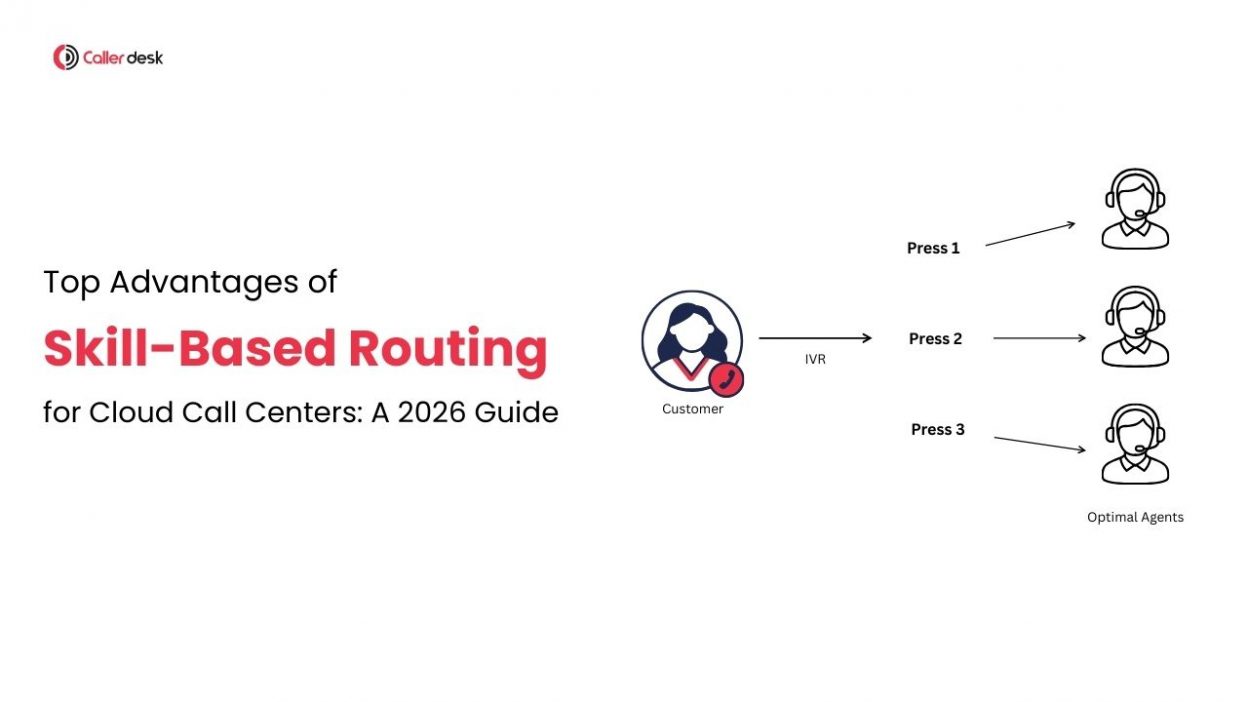
Skill-based routing is a call distribution method that routes incoming calls to agents based on specific skills rather than availability alone. These skills may include product knowledge, language proficiency, technical expertise, or experience with certain customer types.
Unlike random or round-robin routing, skill-based routing focuses on relevance. The goal is simple—connect the customer with an agent who can actually help, without unnecessary transfers or delays. In Cloud Call Centers, this approach leads to more efficient conversations and better outcomes for both customers and support teams.
1. Improved First-Call Resolution (FCR)
One of the strongest indicators of good customer service is First-Call Resolution. Customers want their issues resolved in a single interaction, not across multiple calls.
Skill-based routing improves FCR by ensuring that calls reach agents who already have the required knowledge. When the right agent answers the first time, problems are solved faster and customers leave the interaction feeling confident.
Why this matters:
- Higher customer satisfaction
- Fewer escalations and callbacks
- Lower operational effort per issue
2. Enhanced Customer Experience and Satisfaction
Nothing frustrates customers more than repeating the same issue to multiple agents. Skill-based routing removes this friction by reducing transfers and delays.
With skilled agents handling relevant calls:
- Response times improve
- Conversations feel more personal
- Support interactions become smoother
In 2026, experience is a key differentiator. Cloud Call Centers that combine automation with skill-based routing deliver support that feels efficient, respectful, and customer-focused.
3. Better Use of Agent Skills and Expertise
Every support team has agents with different strengths. Skill-based routing ensures those strengths are used effectively.
The system considers:
- Skill sets
- Past performance
- Availability
- Experience level
Technical issues go to technical experts. Billing queries reach trained billing agents. This targeted approach improves service quality and helps agents feel more confident in their role.
4. Reduced Call Handling Time
When agents are already familiar with the issue type, they spend less time understanding the problem. This naturally lowers Average Handle Time (AHT).
Shorter handling times lead to:
- Faster queue movement
- Reduced customer wait times
- Higher call capacity without adding staff
For growing Cloud Call Centers, this efficiency can significantly boost productivity.
5. Flexible Customization for Business Needs
Skill-based routing in Cloud Call Centers can be tailored to match specific business requirements, such as:
- Language-based routing
- Priority routing for VIP customers
- Product or service-specific routing
- Region or location-based routing
This flexibility allows businesses to deliver more relevant and consistent support across different customer segments.
6. Stronger Analytics and Performance Insights
Modern cloud contact center platforms provide detailed analytics on how routing rules perform. Managers can track:
- Agent performance by skill
- Queue efficiency
- Customer wait times
- Call distribution patterns
These insights help teams refine routing strategies, improve training, and make data-driven decisions.
7. Higher Agent Productivity and Morale
Agents perform better when they handle calls they are trained for. Skill-based routing reduces stress by eliminating guesswork and constant transfers.
Benefits for agents include:
- Less burnout
- Better confidence
- Higher job satisfaction
Motivated agents deliver better service, which directly improves customer experience.
8. Smarter AI and Automation Integration
In 2026, Cloud Call Centers often combine skill-based routing with AI-powered tools such as IVR, chatbots, and intent detection.
AI can analyze:
- Customer intent
- Urgency of requests
- Emotional tone
Based on this data, calls are routed to the most suitable agent. This layered intelligence makes customer support more responsive and intuitive.
9. Easy Scalability for Growing Businesses
As businesses expand, support volumes increase. Cloud Call Centers with skill-based routing scale easily without disrupting service quality.
You can:
- Add new skill groups
- Update routing rules
- Support remote teams
- Handle seasonal spikes efficiently
This scalability makes the system future-ready.
10. Lower Costs and Better ROI
Skill-based routing improves efficiency at every level. Fewer transfers, faster resolutions, and optimized agent usage reduce overall costs.
It also minimizes training expenses by allowing agents to specialize rather than learn everything. For businesses focused on growth and efficiency, this delivers strong ROI.
Conclusion: Why Skill-Based Routing Matters in 2026
Customer service expectations are higher than ever, and businesses need smarter systems to keep up. Skill-based routing in Cloud Call Centers ensures customers connect with the right agent from the very first interaction. It improves resolution rates, reduces wait times, supports agent productivity, and lowers operational costs.
For businesses aiming to deliver consistent, high-quality support while scaling efficiently, skill-based routing is no longer optional – it’s essential.
To experience intelligent call handling built for modern teams, explore CallerDesk. Visit callerdesk.io and take the next step toward smarter customer communication.