
Summary-
- 1 Summary-
- 2 Introduction-
- 3 Skill-Based Routing: Connecting the Call to the Right Expertise
- 4 Priority Routing: When Urgency or Importance Comes First
- 5 Skill-Based Routing vs. Priority Routing: The Real Difference
- 6 Choosing What Fits Your Call Center
- 7 Using Both Together (Which Many Call Centers Do)
- 8 Why Routing Matters More Than It Appears
- 9 Final Thoughts-
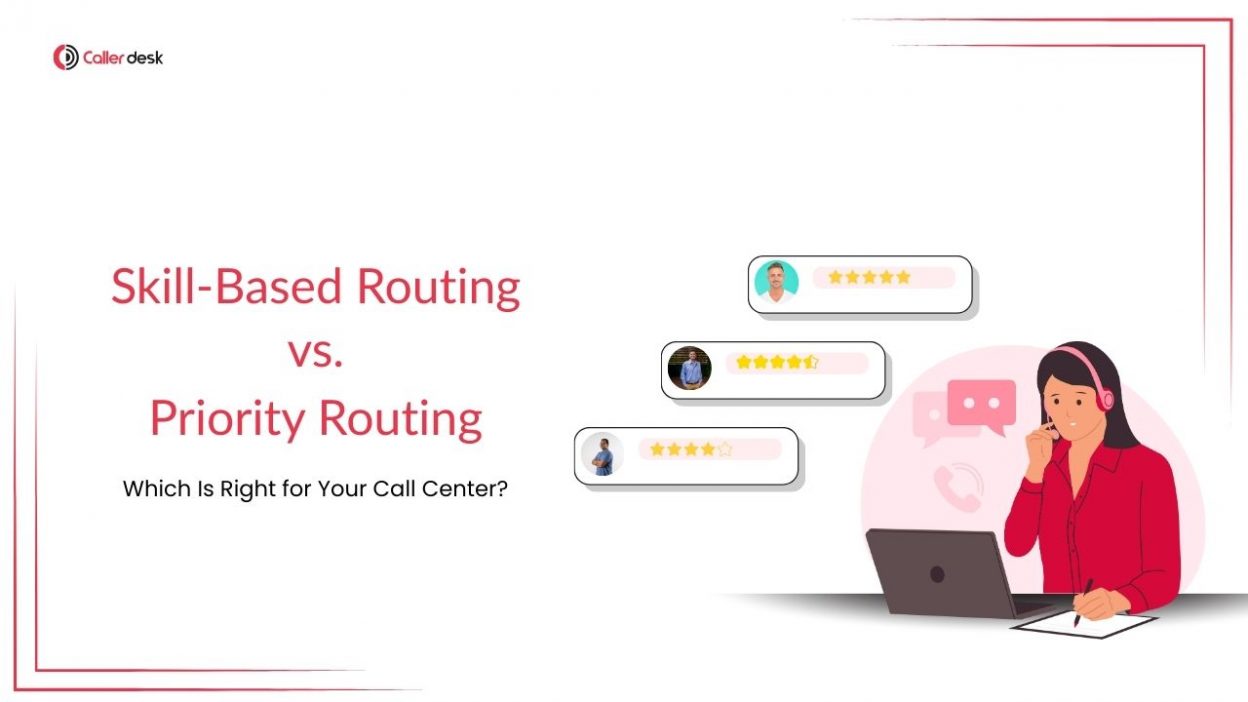
Picking the right call routing method can make or break a call center’s day-to-day flow. Here’s what actually sets Skill-Based Routing and Priority Routing apart, without any jargon. Skill-Based Routing matches each caller with an agent who knows how to solve their problem, so callers waste less time bouncing around and get better answers.
Priority Routing does something different, it pushes urgent calls or VIP customers to the front of the line when things get hectic. This blog gets into the nuts and bolts of how both systems work, where they shine, and why a lot of call centers end up using both to get the job done. You’ll walk away with a clearer sense of which method makes the most sense for your team, whether you’re dealing with high call volume, time-sensitive issues, or just want to keep customers happy.
Introduction-
Every call center runs into the same pressure points. Customers want help immediately. Agents get stretched during busy hours. Even a short delay can turn a normal query into a frustrating experience. More often than not, the root of the problem isn’t staffing or effort—it’s how calls are routed.
Call routing decides whether a customer reaches the right person quickly or gets stuck moving from one agent to another. Two routing methods are commonly used to manage this flow: Skill-Based Routing and Priority Routing. While they may sound similar, they are built to solve very different problems. Understanding that difference makes choosing the right approach much easier.
Skill-Based Routing: Connecting the Call to the Right Expertise
Skill-Based Routing focuses on what the customer needs and who can handle it best. Instead of pushing calls to the next available agent, it routes them based on agent capability.
Imagine a customer calling because their internet router keeps restarting. If that call lands with a billing agent, nothing moves forward. The agent listens, apologises, and transfers the call. The customer explains everything again. Frustration builds.
With Skill-Based Routing, that same call goes directly to a technical agent who deals with such issues every day. The conversation starts at the right place.
How Skill-Based Routing usually works
The process is simple and logical:
- The caller selects an option or the system detects the issue
- The required skill is identified
- The call is routed to an agent trained for that problem
There’s no unnecessary complexity. Just smarter matching.
Why many call centers depend on it
Skill-Based Routing reduces repeat explanations and unnecessary transfers. Customers reach someone who understands the issue, and agents work within their strengths. This improves first-call resolution and keeps support teams confident, especially in environments handling mixed queries—technical support, product guidance, language-specific requests, and more.
Priority Routing: When Urgency or Importance Comes First
Priority Routing works from a different angle. It’s less about what the issue is and more about who is calling or how urgent the situation is.
Think about industries like banking, healthcare, insurance, or travel. A high-value customer or an emergency case cannot wait in a standard queue during peak hours. Priority Routing ensures those calls move ahead.
What happens behind the scenes
The flow is straightforward:
- The system assigns a priority level to the call
- High-priority calls move ahead in the queue
- Agents answer based on urgency, not waiting time
The goal is speed, not skill matching.
Where Priority Routing works best
Priority Routing is widely used where response time directly affects trust. Premium customers, SLA-bound clients, or time-sensitive cases benefit most. It ensures important calls don’t get delayed simply because the queue is long.
Skill-Based Routing vs. Priority Routing: The Real Difference
The simplest way to understand the difference is this:
- Skill-Based Routing matches the right expert to the right problem
- Priority Routing moves important or urgent callers ahead in line
That’s the core distinction. Everything else is detailed.
| Routing Method | Main Focus | Best Used For |
| Skill-Based Routing | Agent expertise | Technical issues, complex or mixed queries |
| Priority Routing | Caller importance or urgency | VIP customers, emergencies, SLA-driven cases |
Both improve customer experience, but in different ways.
Choosing What Fits Your Call Center
There’s no universal “best” option. The right choice depends entirely on how your call center operates.
When Skill-Based Routing makes more sense
Skill-Based Routing is ideal if your call center handles:
- Technical troubleshooting
- Complex product queries
- Multiple languages
- Specialised support categories
In these cases, accuracy matters more than speed alone. Customers benefit most when they reach someone who knows what they’re doing.
When Priority Routing is the better choice
Priority Routing is a stronger fit if you deal with:
- Premium or paid customers
- Strict response-time SLAs
- Urgent or sensitive situations
Here, speed protects trust. Important callers should not wait, even if their issue is simple.
Using Both Together (Which Many Call Centers Do)
In practice, many modern call centers use a combination of both.
For example:
- A premium customer calls with a technical issue
- Priority Routing moves the call ahead in the queue
- Skill-Based Routing then connects them to a technical expert
The customer waits less and gets the right help. This hybrid approach balances speed with accuracy and works well for growing teams.
Why Routing Matters More Than It Appears
Customers may never see your routing logic, but they feel its impact immediately. Good routing:
- Shortens wait times
- Reduces call transfers
- Improves first-call resolution
- Lowers agent stress
- Prevents call abandonment
Most importantly, it shapes how customers remember your brand. A smooth call builds confidence. A frustrating one does lasting damage.
Final Thoughts-
Both Skill-Based Routing and Priority Routing are proven methods. The real question is what your call center needs more.
If expert handling and accuracy matter most, Skill-Based Routing is the stronger option.
If urgency and fast access for important callers matter more, Priority Routing does the job.
And if your operation demands both, combining them is often the smartest move.
If you’re looking for a routing setup that supports both approaches without complex configuration, callerdesk offers flexible options designed for real call center workflows.