
Summary-
- 1 Summary-
- 2 Introduction-
- 3 What Traditional Communication Looks Like Today
- 4 What SMS Integration Actually Means
- 5 Why Speed Matters More Than Ever
- 6 SMS Fits Naturally Into Daily Life
- 7 Engagement Is Higher With SMS
- 8 Less Repetition for Business Teams
- 9 Clear Messages Reduce Confusion
- 10 Tracking Is Easier With SMS Integration
- 11 Automation Makes SMS Stronger Than Traditional Communication
- 12 SMS Is Cost-Effective and Scalable
- 13 Better Customer Experience Over Time
- 14 Where Traditional Communication Still Has Value
- 15 Why Businesses Are Moving Towards SMS Integration
- 16 How CallerDesk Helps With SMS Integration
This article looks at why SMS is slowly becoming more useful than calls or emails for everyday business communication. Most customers don’t answer unknown calls during the day, and emails rarely get immediate attention. A short SMS feels easier. It doesn’t demand a response, but it still gets the information across. That’s where SMS fits in.
The blog breaks down how traditional communication ends up creating extra follow-ups and delays, while SMS helps information reach customers faster and with less effort. It also explains why messages feel easier to receive, easier to track, and less disruptive. Used alongside calls, SMS makes communication simpler, calmer, and more predictable for both teams and customers.
Introduction-
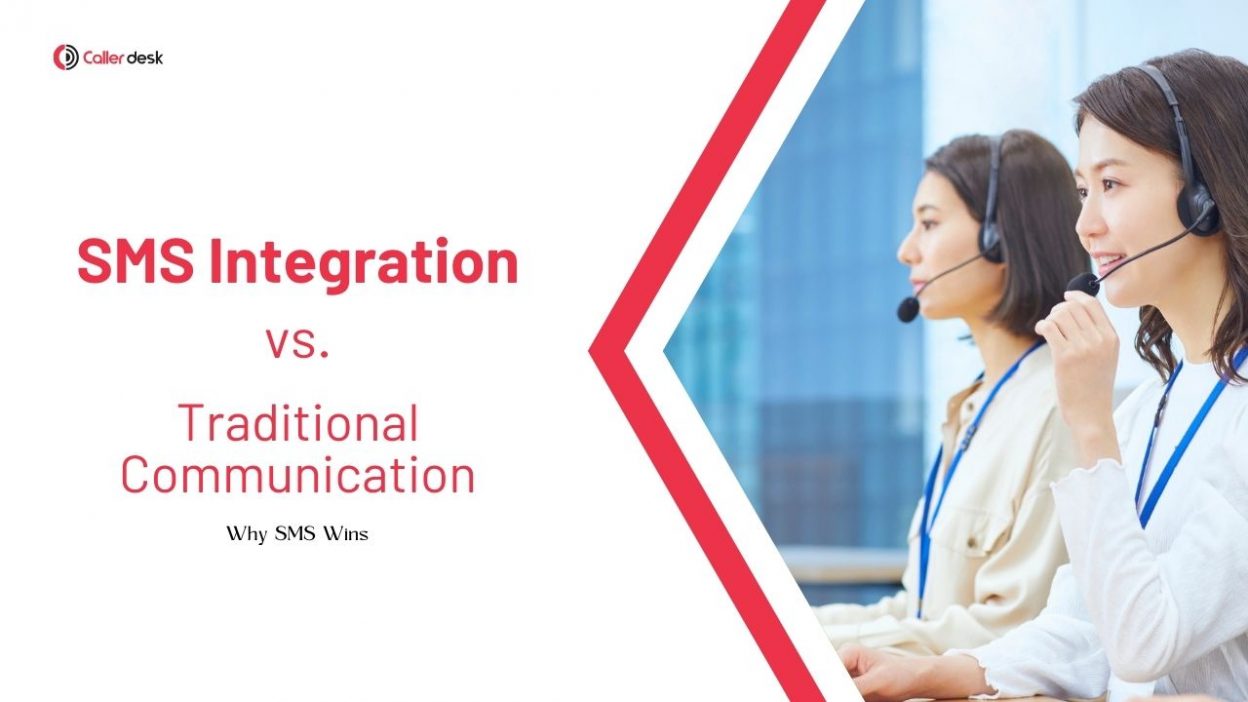
Business communication used to be simple. A phone call, an email, or a face-to-face conversation was enough to get things done. But customer behaviour has changed. People are busier, calls go unanswered, and inboxes are crowded. What customers want today is clear and timely information without disruption. This is where SMS Integration has started replacing many Traditional Communication methods.
A short message can confirm, remind, or update without demanding attention. For businesses, this means better reach and less effort. In this blog, we compare SMS Integration with Traditional Communication and explain why SMS has become a more reliable and practical communication choice for modern businesses.
What Traditional Communication Looks Like Today
In most businesses, communication still happens through calls, emails, and manual follow-ups. It’s what teams are used to, so they keep using it.
But in real situations, it doesn’t always work smoothly. Calls depend on timing. If the customer is busy, the call is missed and the conversation stops there. Emails sit unread because inboxes are already full. Follow-ups then turn into repeated calls or reminders, which slowly eat up the team’s time.
When this happens every day, work starts moving slower. Updates don’t reach on time. Responses get delayed. Teams end up spending more effort chasing people instead of actually solving problems. Traditional Communication still works in some cases, but it often feels out of sync with how fast businesses need to operate today.
What SMS Integration Actually Means
SMS Integration is not about replacing calls completely. It is about adding text messaging directly into your business communication system.
Instead of sending messages from personal phones or separate tools, SMS works from the same platform used for calls. Messages can be sent manually or triggered automatically based on actions.
For example, a missed call can trigger a follow-up message. A scheduled appointment can send a reminder. A support request can receive a status update. Everything stays connected, logged, and easy to track.
Why Speed Matters More Than Ever
Speed is where Traditional Communication often fails. A call that goes unanswered stops the conversation. An email might be seen hours later.
SMS Integration delivers information instantly. Messages usually reach customers within seconds and are read quickly.
When updates are time-sensitive, SMS ensures nothing is delayed. Businesses no longer have to wait for customers to pick up or check their inbox. The message reaches them when it matters.
SMS Fits Naturally Into Daily Life
Phone calls interrupt. Emails require time and attention. That’s where Traditional Communication can feel intrusive.
SMS works differently. Messages wait quietly until the customer is ready to read them. There is no pressure to respond immediately.
This makes communication feel respectful and convenient. Customers stay informed without feeling disturbed, which improves their overall experience with the business.
Engagement Is Higher With SMS
One of the biggest challenges with Traditional Communication is low engagement. Unknown calls are ignored. Promotional emails are skipped.
SMS Integration sees much better engagement. Messages feel personal and direct. Customers are more likely to read them and take action.
Whether it is a reminder, confirmation, or follow-up, SMS helps businesses get noticed without trying too hard.
Less Repetition for Business Teams
With Traditional Communication, agents often repeat the same task. Calling again. Sending reminders manually. Following up multiple times.
SMS Integration reduces this repetition. A single message can replace multiple call attempts. Automated messages handle routine updates without agent involvement.
This saves time, reduces frustration, and makes daily work more manageable for teams.
Clear Messages Reduce Confusion
Calls can run long. Emails can include too much information. Both can confuse customers.
SMS Integration encourages short and clear messages. Only essential information is shared.
This clarity helps customers understand quickly and reduces back-and-forth communication. Fewer misunderstandings lead to smoother interactions.
Tracking Is Easier With SMS Integration
Tracking Traditional Communication can be messy. Call notes may be incomplete. Emails may be scattered.
SMS Integration keeps all messages recorded in one place. Every interaction is logged automatically along with call history.
This gives teams full visibility into customer communication. Follow-ups become easier, and decisions are based on clear information.
Automation Makes SMS Stronger Than Traditional Communication
Automation is where SMS clearly outperforms Traditional Communication.
Calls and emails usually need manual effort. SMS Integration allows messages to be sent automatically based on triggers.
Appointment reminders, payment confirmations, and service updates go out without delay or human error. Customers receive consistent communication every time.
SMS Is Cost-Effective and Scalable
Traditional Communication can become expensive as teams grow. More calls mean more agents. More follow-ups mean more time.
SMS Integration is cost-efficient. Messages are affordable and can be sent in bulk without increasing workload.
This makes SMS ideal for businesses that want to scale communication without scaling costs.
Better Customer Experience Over Time
Customers value timely updates. They want to know what is happening without chasing information.
SMS Integration delivers this consistently. Customers receive confirmations, reminders, and updates without effort.
Over time, this builds trust. Communication feels reliable, and customers feel respected.
Where Traditional Communication Still Has Value
Traditional Communication still matters for complex discussions or sensitive conversations.
However, SMS Integration works best when used alongside calls. SMS handles updates and reminders. Calls handle deeper conversations.
This balance improves efficiency without losing the human touch.
Why Businesses Are Moving Towards SMS Integration
Customer preferences are clear. People respond better to messages than calls.
SMS Integration aligns with how customers communicate today. Traditional Communication alone is no longer enough.
Businesses that adapt communicate faster, reduce effort, and stay organised.
How CallerDesk Helps With SMS Integration
CallerDesk offers SMS Integration as part of its Cloud Telephony platform.
Messages and calls work from the same system. Businesses can automate follow-ups, reminders, and alerts while keeping full visibility.
Agents don’t need extra tools. Everything stays simple, connected, and easy to manage.
Conclusion-
Good communication is not about using too many channels. It is about reaching people at the right time. That is where SMS Integration helps. Important updates go out without agents having to call again or wait for email replies. Calls and emails still matter, but relying only on them often slows things down. Messages get missed.
Follow-ups take longer. SMS quietly handles that gap. Teams spend less time chasing customers, and customers know what is happening without asking. Over time, this makes daily communication smoother and more predictable. If you want your calling setup to work with messaging, not against it, CallerDesk makes that easy. You can see how it works at callerdesk.io.