
Summary-
- 1 Summary-
- 2 Introduction-
- 3 What Is SMS Integration?
- 4 Understanding Cloud Telephony in Simple Terms
- 5 How SMS Integration Works with Cloud Telephony
- 6 Why SMS Integration Matters for Modern Businesses
- 7 Key Benefits of SMS Integration in Cloud Telephony
- 8 Common Use Cases of SMS Integration
- 9 SMS Integration for Internal Teams
- 10 Security and Compliance in SMS Integration
- 11 Why SMS Integration Works Better Than Standalone Messaging Tools
- 12 How CallerDesk Supports SMS Integration
- 13 Best Practices for Using SMS Integration
- 14 Conclusion-
When most communication depends only on phone calls, everyday work slowly starts getting messy. Customers ring up just to ask if something was done. Agents end up giving the same updates again and again. Time gets wasted on things that don’t really need a conversation. This is where SMS Integration helps in a very practical way.
Instead of waiting on calls, customers get simple messages for missed calls, follow-ups, reminders, or updates. They know what’s happening without having to chase anyone. Teams don’t need to remember who to message or when, the system takes care of it. Since calls and messages stay linked, nothing slips through the cracks. Communication feels calmer, clearer, and easier to manage.
Introduction-
Business communication has changed a lot in the last few years. Customers no longer want to wait on calls just to get small updates or confirmations. They expect quick, clear, and timely information. This is where SMS Integration plays a very important role in modern communication systems. When SMS works along with Cloud Telephony, businesses get a simple way to connect with customers without creating extra workload for teams.
Messages reach customers instantly and are usually read within minutes. From order updates to service alerts, SMS makes communication smooth and reliable. In this blog, we will explain what SMS Integration is, how it works with Cloud Telephony, its benefits, use cases, and why it has become a must-have for growing businesses.
What Is SMS Integration?
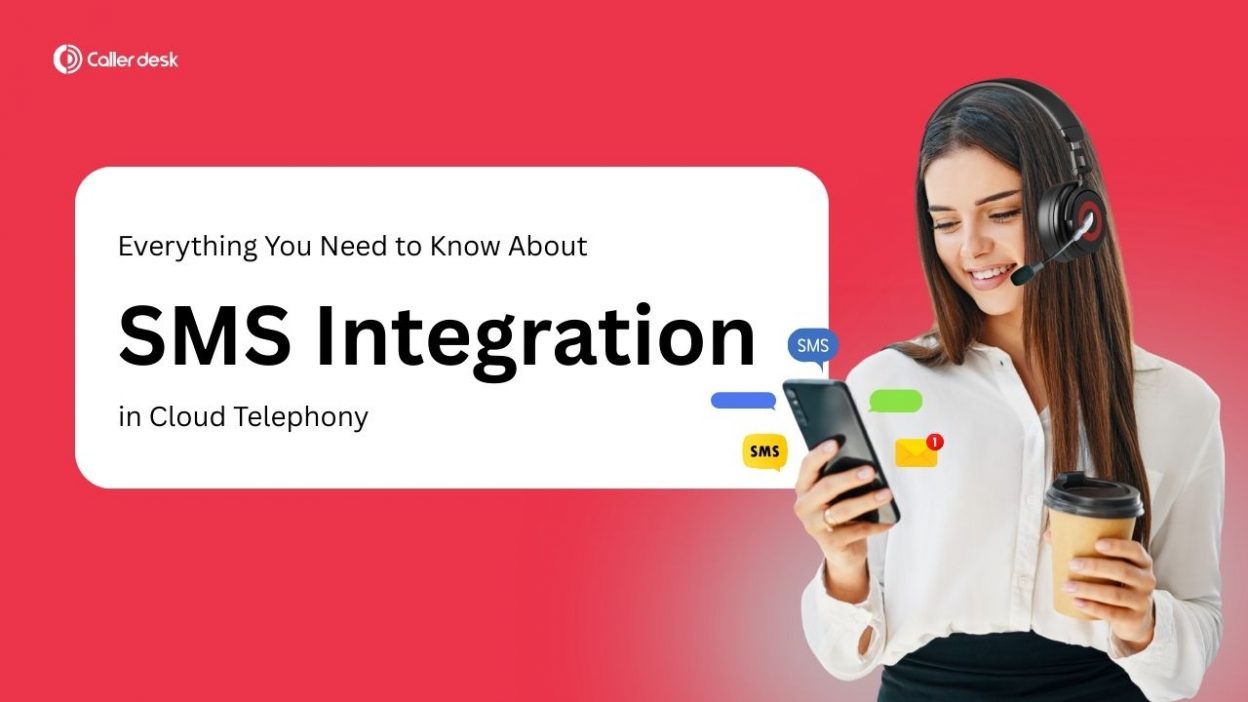
SMS Integration means connecting text messaging with your calling system so both work together from one platform. Instead of sending messages manually from a phone, businesses can automate and manage SMS directly from their Cloud Telephony system.
With SMS Integration, messages can be triggered automatically based on call actions. For example, after a missed call, a confirmation message can be sent. After a support call, a ticket update can be shared. Everything happens in the background without manual effort.
This integration ensures that calls and messages stay connected. Teams get full context. Customers get clear information. Communication becomes faster and more organised.
Understanding Cloud Telephony in Simple Terms
Cloud Telephony is a calling system that works over the internet instead of traditional phone lines. It allows businesses to manage calls using a web-based dashboard. There is no heavy hardware setup. Everything is flexible and scalable.
When SMS Integration is added to Cloud Telephony, businesses can handle both voice and text communication from one place. This saves time and reduces dependency on multiple tools.
Cloud Telephony also helps track call history, message logs, agent activity, and customer interactions in one view. This complete visibility improves decision-making and customer experience.
How SMS Integration Works with Cloud Telephony
The working of SMS Integration with Cloud Telephony is simple but powerful.
When a call event happens, such as a missed call, completed call, or scheduled callback, the system triggers an SMS automatically. The content of the message can be customized based on the scenario.
For example:
- A missed call can trigger an SMS saying, “We tried reaching you. Our team will call back soon.”
- A completed support call can trigger a ticket number or status update.
- A sales inquiry can trigger a follow-up message with product details.
Agents do not need to remember sending messages. The system handles it. This reduces errors and delays.
Why SMS Integration Matters for Modern Businesses
SMS Integration is not just a feature. It is a communication necessity today.
SMS messages have very high open rates. Most people read messages within minutes. Calls, on the other hand, can be missed or ignored. By combining calls and SMS, businesses ensure their message reaches the customer.
SMS also does not interrupt customers. People can read messages at their convenience. This makes communication respectful and effective.
For businesses handling high call volumes, SMS Integration reduces repeat calls. Customers do not need to call again just to ask for updates.
Key Benefits of SMS Integration in Cloud Telephony
Reduces Call Load
Many customers call just to check status updates. With SMS Integration, updates are sent automatically. This reduces unnecessary calls and frees agents to handle important conversations.
Improves Customer Experience
Customers feel informed and valued when they receive timely messages. Clear communication builds trust and satisfaction.
Saves Time for Agents
Agents do not need to repeat the same information again and again. SMS delivers basic details in advance. Calls become shorter and more focused.
Ensures Consistent Communication
Manual messaging can lead to missed or incorrect messages. SMS Integration ensures every customer gets the right message at the right time.
Easy Tracking and Records
All messages are logged in the system. Teams can track what was sent, when it was sent, and to whom. This helps in audits and quality checks.
Common Use Cases of SMS Integration
Customer Support
Support teams can send ticket numbers, resolution updates, and closure confirmations through SMS. Customers stay informed without calling again.
Sales Follow-Ups
After a sales call, an SMS can be sent with product details, pricing links, or meeting reminders. This keeps the conversation active.
Appointment Reminders
Businesses can send appointment confirmations and reminders automatically. This reduces no-shows and improves planning.
Payment and Billing Alerts
Invoices, payment links, and due date reminders can be shared through SMS. Customers get clear instructions without confusion.
Missed Call Handling
If a call is missed, an instant SMS assures the customer that their call was noticed. This small message improves trust.
SMS Integration for Internal Teams
SMS Integration is not limited to customers. It also helps internal communication.
Team alerts, shift notifications, and important updates can be sent via SMS. This ensures quick visibility, especially when emails are ignored.
Managers can also get SMS alerts for critical call events. This helps in faster decision-making.
Security and Compliance in SMS Integration
When businesses use SMS Integration, data security is important. Messages often carry sensitive information like order details or appointment data.
A reliable Cloud Telephony provider ensures secure message delivery and proper access control. Message logs are stored safely. Permissions can be managed easily.
Compliance with local communication regulations is also handled within the system. This reduces risk for businesses.
Why SMS Integration Works Better Than Standalone Messaging Tools
Standalone SMS tools work separately from calling systems. This creates gaps in communication.
With SMS Integration inside Cloud Telephony, everything is connected. Agents can see call history and message history together. Customers do not have to repeat information.
Automation also works better when both systems are connected. Follow-ups become smarter and more timely.
How CallerDesk Supports SMS Integration
CallerDesk offers SMS Integration as part of its Cloud Telephony solution. Businesses can manage calls and messages from one simple dashboard.
Messages can be automated based on call actions. Custom templates can be created easily. Logs and reports are available for tracking.
CallerDesk focuses on making communication practical and easy for daily operations. Teams do not need technical knowledge to get started.
Best Practices for Using SMS Integration
Keep messages short and clear. Avoid unnecessary details.
Send messages at the right time. Do not overload customers.
Personalise messages where possible. It feels more human.
Use SMS as support, not replacement, for calls.
Track performance and improve message content regularly.
Conclusion-
SMS Integration in Cloud Telephony has quietly become a basic need for many businesses today. When teams stop depending only on calls and start using SMS alongside them, things simply run better. Fewer customers call back just to ask for updates. Messages reach them on time, without disturbing their day. For agents, it means less repetition and more meaningful conversations, because they already know the context.
When calls and messages support each other, communication feels smooth instead of scattered. Tools like CallerDesk make this setup easy to handle from one place, without adding extra work. If your business wants clearer communication without unnecessary complexity, it’s worth exploring SMS Integration with Cloud Telephony. You can learn more at CallerDesk.io and see how it fits into your daily operations.