
Summary-
- 1 Summary-
- 2 Introduction-
- 3 What SMS Integration Really Means for Businesses
- 4 Why Personalized Customer Outreach Matters More Than Ever
- 5 Advantage 1: Customers Read Messages Even When They Miss Calls
- 6 Advantage 2: Personalization Without Extra Manual Work
- 7 Advantage 3: Better Timing Makes Outreach Feel Polite
- 8 Advantage 4: Clear Follow-Ups With Proper Context
- 9 Advantage 5: Reduced Call Load for Sales and Support Teams
- 10 Advantage 6: Consistent Communication Across the Journey
- 11 Advantage 7: Complete Visibility for Teams and Managers
- 12 Advantage 8: Builds Trust Through Timely Updates
- 13 Advantage 9: Easy to Scale as the Business Grows
- 14 Advantage 10: Better Customer Experience With Less Effort
- 15 SMS Integration in Sales Outreach
- 16 SMS Integration in Support Outreach
- 17 How CallerDesk Supports SMS Integration
- 18 Best Practices for Using SMS Integration
- 19 Conclusion-
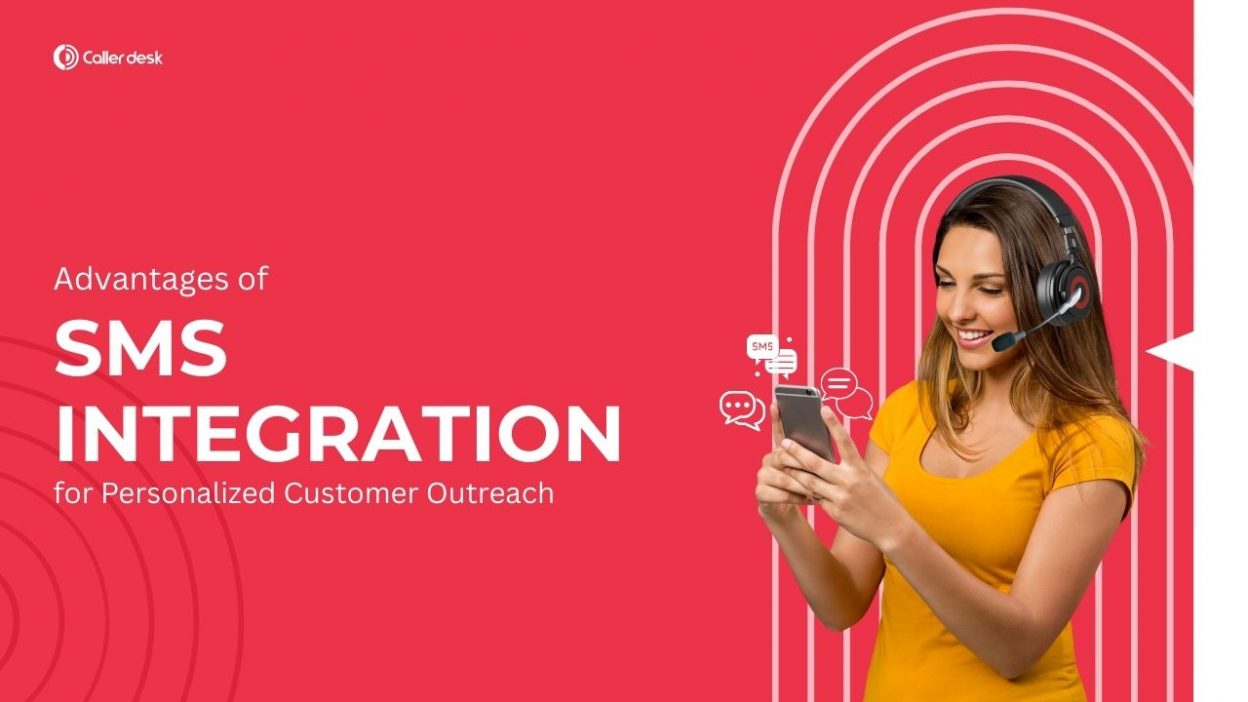
Customers today aren’t avoiding businesses. They’re just busy. Calls come at the wrong time, phones stay on silent, and messages get checked later when there’s breathing room. That’s why SMS Integration works so well. It lets businesses stay present without interrupting. A simple message after a missed call, a reminder before a discussion, or an update on a request keeps the conversation alive in a natural way.
Because these messages are tied to real calls and real actions, they don’t feel automated or random. Teams save effort, customers stay informed, and communication feels respectful. Platforms like CallerDesk bring calls and SMS together, making customer outreach easier to manage as conversations and volumes grow.
Introduction-
Customer communication has changed quietly over the years. People still take calls, but they don’t always answer them. Schedules are tight, phones are often on silent, and unknown numbers are easy to ignore. That does not mean customers want less communication. They just want it in a way that fits into their day. This is where SMS Integration becomes useful for businesses.
Text messages allow teams to share updates, reminders, and confirmations without asking for immediate attention. When messaging is connected with calling systems, customer outreach becomes more thoughtful and more personal. In this blog, we’ll look at the real advantages of SMS Integration and how it helps businesses reach customers in a clear, practical, and reliable way.
What SMS Integration Really Means for Businesses
SMS Integration is not about sending bulk promotional messages. It is about connecting text messaging with your existing calling or communication system so both work together.
Instead of agents switching between tools or using personal phones, messages are sent directly from the same platform they use for calls. These messages are often triggered by real actions. A missed call. A completed support interaction. A scheduled appointment.
Because of this connection, calls and messages stay linked. Teams have context. Customers receive messages that make sense. Communication becomes organised instead of scattered.
Why Personalized Customer Outreach Matters More Than Ever
Customers today receive messages from many businesses. Most of them sound the same. Generic messages are easy to ignore.
Personalized outreach feels different. A message that refers to a recent interaction. A reminder that arrives at the right time. An update that answers a question before it is asked.
SMS Integration supports this naturally. Since messages are linked to call activity and customer data, outreach becomes relevant by default. This relevance is one of the strongest advantages of SMS Integration for modern businesses.
Advantage 1: Customers Read Messages Even When They Miss Calls
Not every customer is in a position to take a call. Phones stay silent. Meetings run long. Sometimes people just miss it.
That’s where SMS Integration quietly helps. Even if a call goes unanswered, a short message still reaches the customer. It lets them know someone tried to connect and why. There is no pressure to respond immediately. They can read it when they get a moment.
This keeps communication open. Instead of starting from scratch later, the conversation continues in a simple and practical way.
Advantage 2: Personalization Without Extra Manual Work
Personalization often sounds like more effort. In reality, SMS Integration reduces manual work.
Messages can automatically include customer names, appointment dates, ticket numbers, or order references. Agents don’t have to type these details again and again.
This saves time and avoids mistakes. At the same time, customers feel the message is meant for them. It does not feel copied or generic. This balance is a key advantage of SMS Integration.
Advantage 3: Better Timing Makes Outreach Feel Polite
A phone call demands immediate attention. A message does not.
SMS Integration allows businesses to share information without interrupting customers. Updates can be read when convenient. Responses come naturally instead of being forced.
This makes outreach feel respectful. Customers do not feel chased. Over time, this improves engagement and reduces frustration on both sides.
Advantage 4: Clear Follow-Ups With Proper Context
Follow-ups often fail because customers forget previous conversations.
With SMS Integration, follow-ups carry context. A message refers to a recent call. A reminder mentions the scheduled discussion. A support update links back to the issue raised earlier.
This clarity helps customers respond faster. It also helps agents avoid repeating information. Conversations move forward smoothly instead of starting from zero each time.
Advantage 5: Reduced Call Load for Sales and Support Teams
Not every update needs a call.
Many customer interactions are informational. Confirmation messages. Status updates. Simple reminders.
SMS Integration allows businesses to share this information through messages instead of repeated calls. This reduces call volume and frees up agents for conversations that actually need human interaction.
As a result, teams work more efficiently and customers receive timely updates without unnecessary interruptions.
Advantage 6: Consistent Communication Across the Journey
One common frustration customers have is inconsistency. They receive a call one day, no update the next, and then another call without context.
SMS Integration brings some order to this. Messages follow the same flow as calls. After an interaction, a small update goes out. Before the next step, a reminder is sent.
Nothing feels sudden or disconnected. Customers know what is happening and why. Over time, this steady communication makes the business feel more reliable and organised.
Advantage 7: Complete Visibility for Teams and Managers
When messages are sent from different phones or tools, things get messy fast. One agent doesn’t know what another has already told the customer.
With SMS Integration, every message stays recorded along with call details. Anyone looking at the customer history can immediately see what was shared and when.
This avoids repeated explanations and awkward follow-ups. Teams work with clarity instead of assumptions, which improves both internal coordination and customer experience.
Advantage 8: Builds Trust Through Timely Updates
Customers don’t always need long explanations. Often, they just want to know that their request hasn’t been forgotten.
A short message confirming a callback. An update saying the issue is being worked on. A note that the next step will happen soon.
SMS Integration makes these small updates easy to send at the right time. Individually, they seem minor. Together, they build trust slowly and naturally, without forcing conversation.
Advantage 9: Easy to Scale as the Business Grows
As businesses grow, manual follow-ups become difficult to manage.
SMS Integration scales without adding complexity. Automated messages handle routine updates while still feeling personal.
This makes it easier to manage larger customer volumes without compromising outreach quality. Growth does not break communication flow.
Advantage 10: Better Customer Experience With Less Effort
Good customer experience does not always need long conversations.
SMS Integration simplifies communication. Customers get clear updates. Agents save time. Nothing feels complicated.
Calls and messages support each other instead of competing. Outreach becomes smooth, simple, and reliable.
SMS Integration in Sales Outreach
Sales teams depend on timely follow-ups.
SMS Integration helps sales teams stay connected with leads even when calls are missed. A confirmation after an enquiry. A reminder before a scheduled call. A follow-up after a discussion.
These small touches keep leads engaged without pressure. Conversations progress naturally and conversion chances improve.
SMS Integration in Support Outreach
Support teams often deal with customers who just want updates.
SMS Integration allows teams to share ticket numbers, progress updates, and resolution messages instantly. Customers do not have to call again just to check status.
This reduces repeat calls and improves satisfaction. Support outreach becomes calmer and more efficient.
How CallerDesk Supports SMS Integration
CallerDesk offers SMS Integration as part of its cloud communication platform. Calls and messages work together from one panel.
Businesses can automate reminders, missed-call follow-ups, and support updates. Agents do not need separate tools. Customers receive timely, relevant messages.
This approach keeps communication simple and practical, which is how SMS Integration delivers real value.
Best Practices for Using SMS Integration
To make SMS Integration effective, businesses should keep a few things in mind.
Messages should be short and clear.
Timing should respect customer schedules.
Personalization should be used wherever possible.
Messages should add value, not noise.
When used thoughtfully, SMS Integration supports outreach instead of overwhelming customers.
Conclusion-
Personalized customer outreach does not need to be complicated. It needs to be consistent, clear, and respectful of the customer’s time. SMS Integration helps businesses communicate in this balanced way. It supports calls without replacing them and fills gaps when conversations don’t happen as planned. Messages keep customers informed, reduce confusion, and make follow-ups smoother for teams.
Over time, this creates a more dependable communication flow that customers can trust. The advantages of SMS Integration are practical, not theoretical. For businesses looking to improve everyday customer outreach without adding extra tools or effort, CallerDesk offers a connected approach. You can explore how it works in real scenarios at CallerDesk.io.