
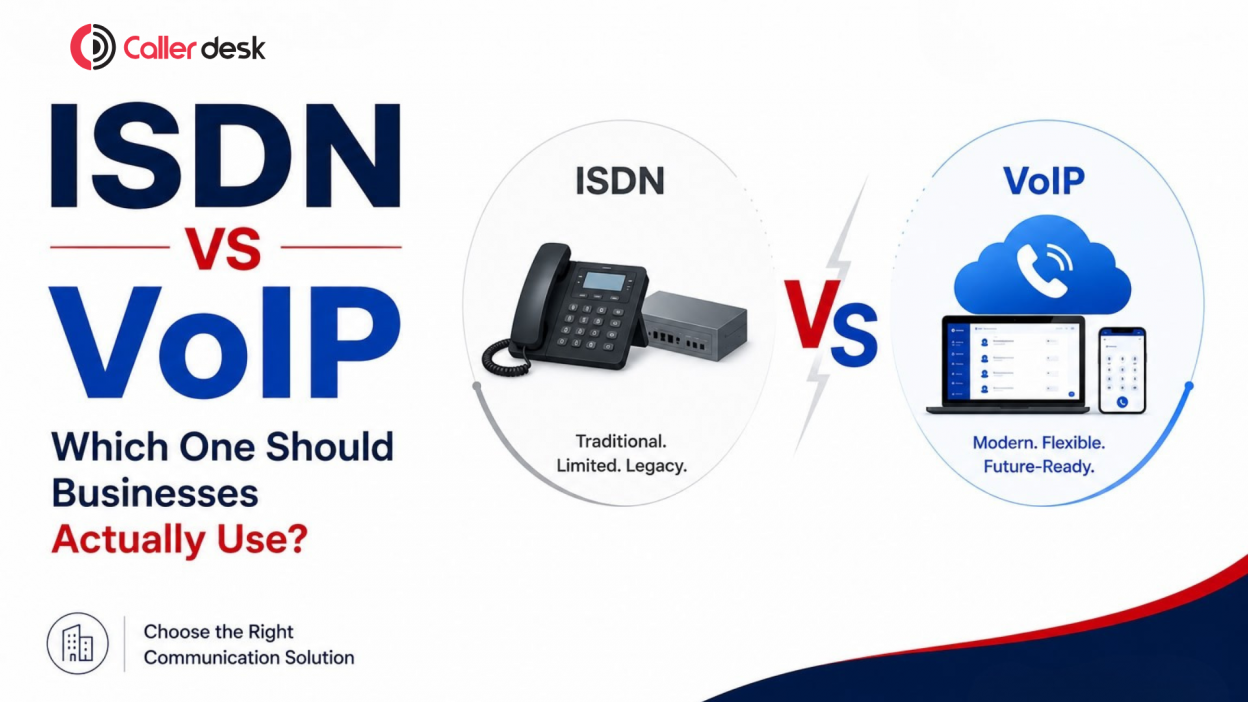
Businesses in 2026 are increasingly comparing ISDN and VoIP as communication technology continues to evolve. With the ongoing ISDN phase-out and the growing demand for flexible, internet-based communication, many companies are looking for a better alternative. Choosing the right phone system is important because it affects costs, productivity, customer experience, and future growth. In this guide, we’ll explain ISDN vs VoIP in simple terms and explore the key differences between them. You’ll learn about costs, features, scalability, reliability, and future readiness so you can make the best decision for your business communication needs.
- 1 What Is VoIP?
- 2 What Is ISDN?
- 3 ISDN vs VoIP: Key Differences at a Glance
- 4 Pros and Cons of VoIP
- 5 Pros and Cons of ISDN
- 6 Why Modern Businesses Are Switching from ISDN to VoIP
- 7 VoIP Features That ISDN Cannot Match
- 8 Common Concerns Businesses Have About Switching to VoIP
- 9 How to Migrate from ISDN to VoIP Successfully
- 10 Benefits of Early Migration
- 11 ISDN vs VoIP: Which One Is Right for You?
- 12 Conclusion
- 13 FAQs
What Is VoIP?
VoIP stands for Voice over Internet Protocol. In simple terms, it is a technology that allows people to make and receive phone calls using the internet instead of traditional telephone lines. This makes communication more flexible, cost-effective, and easier to manage.
A VoIP system works by converting your voice into digital data and transmitting it through an internet connection. The person on the other end receives the call just like a regular phone call, but without the need for traditional phone infrastructure.
Types of VoIP Solutions
- VoIP Phone: A physical phone device that connects to the internet and works like a traditional office phone.
- Softphone Apps: Applications installed on laptops, desktops, or smartphones that allow users to make calls from anywhere.
- Cloud-Based VoIP Systems: Fully hosted communication solutions managed through the cloud with advanced business features.
Today, businesses prefer cloud-based voice calling systems because it offers more flexibility than traditional phone systems. Employees can make and receive calls from the office, home, or while traveling. Modern VoIP services also include features like call forwarding, IVR, call recording, analytics, and CRM integration. These capabilities help businesses improve customer communication while reducing operational costs. As companies continue to adopt digital tools, VoIP has become one of the most popular communication solutions for businesses of all sizes.
What Is ISDN?
ISDN stands for Integrated Services Digital Network. It is a digital communication technology that was designed to improve voice and data transmission over traditional telephone lines. Before internet-based communication became popular, ISDN was one of the most reliable options available for businesses.
ISDN works by converting voice and data into digital signals and transmitting them through telephone networks. This allowed businesses to enjoy clearer call quality, faster data transfer, and the ability to handle multiple communications at the same time.
Businesses used ISDN for many years because it offered better performance than analog phone systems. It provided stable connectivity and helped organizations manage communication more efficiently. For growing companies, ISDN was considered a major upgrade and became a trusted part of daily operations.
Common Business Applications of ISDN
- Managing multiple business phone calls simultaneously.
- Supporting office PBX phone systems.
- Connecting branch offices through reliable communication networks.
- Handling customer support and service calls.
- Enabling voice and data transmission over the same connection.
Although ISDN was once the standard for business communication, many companies are now moving to modern solutions like cloud-based voice calling systems because they offer greater flexibility, scalability, and cost savings.
ISDN vs VoIP: Key Differences at a Glance
| Feature | ISDN | VoIP |
| Technology | Uses digital telephone lines | Uses internet-based communication |
| Cost | Higher installation and maintenance costs | Lower operational and calling costs |
| Scalability | Limited and difficult to expand | Easily scalable as business grows |
| Remote Work Support | Poor support for remote teams | Excellent support for remote and hybrid work |
| Integrations | Limited integrations | Supports CRM and business tool integrations |
| Future Readiness | Being phased out | Future-ready communication solution |
Quick Summary of the Biggest Differences
The biggest difference in ISDN vs VoIP is the technology they use. ISDN depends on traditional phone lines, while VoIP works over the internet. VoIP is more cost-effective, scalable, and flexible for modern businesses. It also supports remote work and advanced integrations, making it a stronger long-term choice for companies looking to modernize their communication systems.
Pros and Cons of VoIP
Pros of VoIP
- Lower communication costs compared to traditional phone systems.
- Easy scalability when adding new users or locations.
- Supports remote and hybrid teams from anywhere.
- Offers advanced features like call recording and CRM integration.
Cons of VoIP
- Requires a stable internet connection to work properly.
- Call quality can be affected by poor network performance.
- Initial migration may require planning and setup.
- Some businesses may need employee training during the transition.
Pros and Cons of ISDN
Pros of ISDN
- Provides stable and consistent voice communication.
- Offers reliable performance for business calling.
- Does not depend on an internet connection.
- Delivers clear call quality through dedicated phone lines.
Cons of ISDN
- Maintenance and operational costs can be high.
- Scaling the system often requires additional hardware.
- Depends on physical infrastructure and phone lines.
- Lacks flexibility for remote work and is being phased out.
Why Modern Businesses Are Switching from ISDN to VoIP
- Voice over Internet Protocol helps businesses reduce communication and maintenance costs.
- It is easy to scale when adding new employees or locations.
- Teams can work from anywhere with remote and hybrid work support.
- Businesses get advanced features like IVR, call recording, and analytics.
- Expanding communication across multiple offices becomes much simpler.
- Better customer experience through faster and more efficient call handling.
- It is a future-ready solution designed for modern business needs.
VoIP Features That ISDN Cannot Match
- Virtual numbers help businesses create a local presence anywhere.
- IVR automatically directs callers to the right department.
- Call routing sends calls to the right person quickly.
- Call recording helps with training and quality checks.
- CRM integration displays customer details during calls.
- Analytics provide insights into call performance.
- Mobile and desktop calling support work from anywhere.
- AI features help automate and improve communication.
Common Concerns Businesses Have About Switching to VoIP
Will Call Quality Suffer?
Many businesses worry about how voice clarity will behave when communication moves from traditional systems to internet-based setups. The concern usually comes from past experiences with weak networks or unstable connections. Since call quality is directly linked to business communication, this becomes one of the most discussed points during evaluation.
Is VoIP Reliable?
Reliability is another common doubt when companies think about switching systems. Businesses often question whether a VoIP system can handle daily call volumes without interruptions. This concern is especially important for teams that depend heavily on consistent customer communication and cannot afford downtime.
What If the Internet Goes Down?
One of the biggest fears is what happens when internet connectivity is disrupted. Since VoIP services depend on the internet, companies naturally think about backup options and continuity of communication during unexpected network issues or outages.
Is VoIP Secure?
Security is always a priority for business communication systems. Many organizations wonder how voice data travels over the internet and whether it is protected from unauthorized access. This concern increases when sensitive customer or business information is involved.
Can I Keep My Existing Business Number?
Businesses often hesitate to switch because they are unsure about their current phone numbers. These numbers are usually linked to branding, customer trust, and long-term communication history, making this a key consideration during migration planning.
Will My Employees Need Training?
Another common thought is how quickly teams can adapt to a new communication system. Employees used to traditional setups may need time to understand new interfaces, features, and workflows, which raises questions about learning and productivity during transition.
How Long Does Migration Take?
Companies also think about the overall time required to move from existing systems to cloud-based voice calling systems. The migration process involves planning, setup, and testing, so businesses want clarity on how quickly the transition can be completed without affecting daily operations.
How to Migrate from ISDN to VoIP Successfully
- Step 1: Review your current communication setup and understand how ISDN is being used in your business today.
- Step 2: Check internet readiness to ensure your network can support a stable VoIP system.
- Step 3: Choose a reliable provider that fits your business communication needs.
- Step 4: Port your existing business numbers so customers can still reach you without changes.
- Step 5: Configure users and devices by setting up extensions, apps, and call flows.
- Step 6: Train employees so they can easily adapt to the new VoIP system.
- Step 7: Test everything properly before going live to avoid communication issues.
Benefits of Early Migration
- Saves cost by reducing maintenance and communication expenses over time.
- Makes scaling easier by allowing quick addition of users and teams.
- Improves flexibility so employees can work from anywhere easily.
- Ensures future-ready communication aligned with modern VoIP technology.
ISDN vs VoIP: Which One Is Right for You?
For Small Businesses
Small businesses often need simple and cost-effective communication. Voice over Internet Protocol works better here because it offers low setup costs and easy scalability. ISDN may feel limited and expensive for growing needs.
For Growing Businesses
Growing companies need flexibility and better features. The VoIP system supports remote work, CRM tools, and easy expansion. ISDN becomes less practical as communication demands increase.
For Enterprises
Enterprises require strong, scalable, and feature-rich communication. VoIP services provide advanced call routing, analytics, and integration options. ISDN struggles to meet large-scale business requirements.
For Multi-Location Organizations
Businesses with multiple offices need unified communication. Voice over Internet Protocol allows seamless connectivity across locations. ISDN lacks the flexibility needed for distributed teams and modern operations.
Conclusion
To sum it up, ISDN worked well for businesses for many years, but communication needs have changed. VoIP offers more flexibility, lower costs, and better support for modern ways of working. If you’re looking for a communication system that can grow with your business, VoIP is a strong alternative to ISDN.
Wondering which communication technology is right for the future? Explore our detailed guide on ISDN in 2026 and the transition to modern solutions.
FAQs
1. What is the main difference between ISDN and VoIP?
ISDN uses traditional telephone lines for communication, while VoIP works over the internet. It is more flexible, cost-effective, and scalable, making it a better option for modern business communication compared to ISDN.
2. Is VoIP better than ISDN for businesses?
Yes, VoIP is generally better because it offers advanced features like call routing, CRM integration, and remote access. It also reduces communication costs and supports business growth more efficiently than traditional ISDN systems.
3. Do I need special equipment to use VoIP?
VoIP can work with simple devices like smartphones, laptops, or phones. Most systems only require a stable internet connection, making it easier to set up compared to ISDN hardware-based systems.
4. Can I keep my business number when switching to VoIP?
Yes, most Voice over Internet Protocol providers allow number porting, which means you can keep your existing business number. This helps maintain customer trust and ensures a smooth transition from ISDN to VoIP.
5. Is VoIP reliable for daily business communication?
VoIP is highly reliable when used with a stable internet connection. Modern Voice over Internet Protocol systems are designed for business use, offering uptime, call quality, and backup options to ensure uninterrupted communication.