
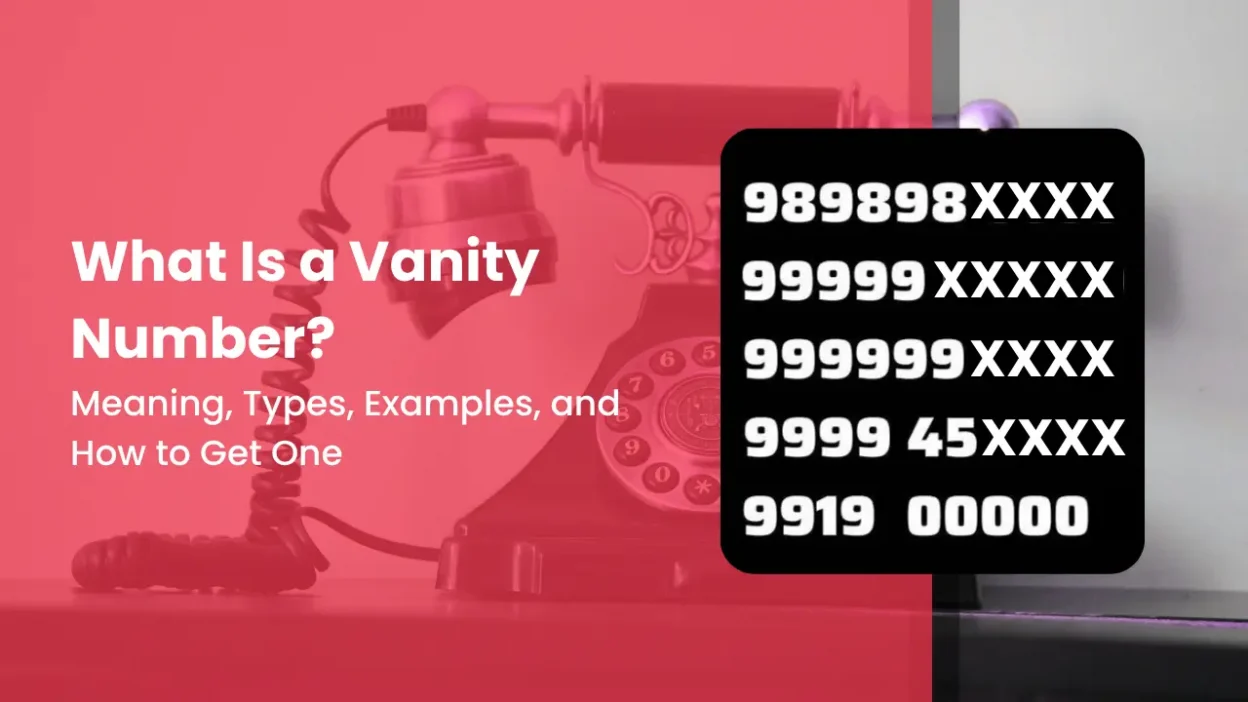
Have you ever remembered a phone number because it was simple, repeated a pattern, or spelled something meaningful? That is exactly what a vanity number is designed to do.
- 1 What Is a Vanity Number?
- 2 How Does a Vanity Phone Number Work?
- 3 Types of Vanity Phone Numbers
- 4 Real Examples of Vanity Numbers
- 5 Why Are Vanity Phone Numbers Easy to Remember?
- 6 Why Use a Vanity Number for Business?
- 7 Vanity Number vs Regular Phone Number
- 8 Vanity Number vs Fancy or VIP Mobile Number
- 9 How to Find a Vanity Number
- 10 How to Get a Vanity Number
- 11 How to Buy a Vanity Number
- 12 Are Vanity Phone Numbers Still Useful?
- 13 Conclusion
Instead of using a random string of digits, businesses and individuals can choose vanity phone numbers that are easier to recognize and remember. A number might spell a word using a phone keypad, repeat the same digits, follow a sequence, or have a personal meaning.
But what makes a number “vanity,” and is it actually useful for a business?
In this guide, we’ll explain what is a vanity number, its meaning, the different types of vanity phone numbers, real-world examples, how they work, and how to get a vanity number without choosing one simply because it looks impressive.
What Is a Vanity Number?
A vanity number is a telephone number deliberately chosen to be memorable. The number may spell a word using the letters on a telephone keypad, or it may use an easy-to-recognize numerical pattern.
In simple terms, the vanity number meaning is:
A phone number selected for its memorability rather than simply accepting a randomly assigned number.
For example, a business could use a number with repeated digits such as 967-1111, or choose a number that represents a word when its digits are entered on a phone keypad.
Vanity numbers are not limited to businesses. Individuals can also use a personalized telephone number, particularly when a mobile operator offers premium, fancy, or VIP number selections.
The important point is that a vanity number does not have to spell a word.
There are two common forms:
- Word-based vanity numbers: Numbers that spell a word or phrase using the telephone keypad.
- Pattern-based vanity numbers: Numbers that use repetition, symmetry, sequences, dates, or another easy-to-remember pattern.
How Does a Vanity Phone Number Work?
A vanity phone number works just like an ordinary phone number from a technical perspective.
The difference is how the number is presented and remembered.
On a standard telephone keypad, letters are associated with numbers:
| Number | Letters |
| 2 | A, B, C |
| 3 | D, E, F |
| 4 | G, H, I |
| 5 | J, K, L |
| 6 | M, N, O |
| 7 | P, Q, R, S |
| 8 | T, U, V |
| 9 | W, X, Y, Z |
For example, the word TAXI corresponds to:
- T = 8
- A = 2
- X = 9
- I = 4
So TAXI becomes 8294.
The caller is ultimately dialing numbers. The letters simply provide a memory shortcut that makes the number easier to recognize.
This system is commonly called a phoneword.
One important limitation is that not every word can be represented perfectly because telephone keypads only assign letters to numbers 2 through 9. Numbers 0 and 1 do not have letters in the standard keypad layout.
Types of Vanity Phone Numbers
Not all vanity phone numbers look the same. They can generally be divided into several categories.
1. Alphanumeric Vanity Numbers
These numbers use letters to create a recognizable word or phrase.
For example, a business may choose a number that represents its service, location, or brand name when the letters are converted to digits.
This type can be particularly useful when the word itself is easier to remember than a random seven- or ten-digit number.
2. Numeric Vanity Numbers
A vanity number does not need letters at all.
A sequence such as 1111, 800-800-8000, or another repeating pattern can be memorable simply because the pattern is easy to recognize.
These are sometimes called custom phone numbers because the subscriber selects a particular numerical arrangement rather than accepting a randomly assigned number.
3. Hybrid Vanity Numbers
A hybrid number combines numbers and letters.
For example, part of the number might use a meaningful numerical sequence while another part represents a word on the keypad.
This approach can be useful when a complete word is unavailable or when a shorter combination creates a more memorable number.
4. Vanity Toll-Free Numbers
A vanity toll free number combines a toll-free number service with a memorable number.
The important distinction is that “toll-free” and “vanity” describe different characteristics:
- Toll-free describes who pays for the call.
- Vanity describes why the number is memorable.
Therefore, a toll-free number is not automatically a vanity number. It becomes a vanity number when its digits, letters, or pattern have been deliberately chosen for recall.
5. Vanity Local Numbers
A vanity number local uses a local number with a memorable sequence.
For example, a local business might choose a number ending in repeated digits, a meaningful year, or another recognizable pattern.
A local vanity number can make sense when a business primarily serves customers in one city or region and wants its local identity to remain visible.
6. Custom Cell Phone Numbers
A custom cell phone number is a mobile number selected for a particular digit pattern instead of accepting a randomly assigned number.
Depending on the telecom operator and market, these numbers may be described as fancy, premium, or VIP numbers.
Common patterns include:
- Repeated digits
- Sequential numbers
- Mirrored numbers
- Memorable dates
- Numerological combinations
- Numbers containing a preferred sequence
These numbers are particularly common in markets where mobile operators allow customers to select from available number combinations.
Real Examples of Vanity Numbers
The idea of a vanity number becomes much clearer when you look at real examples.
Wikipedia’s examples show that memorable phone numbers are not limited to words. They include repeated digits, numbers connected to businesses, and numbers designed around meaningful sequences. (Wikipedia)
1. 313-DETROIT
313-DETROIT uses the city name itself as the memorable part of the number.
The number is associated with Detroit’s well-known 313 area code, making the combination easy to connect with the city.
2. 1-800-Taxicab
This example uses the word “Taxicab” to communicate the service associated with the number.
Instead of remembering an unrelated sequence of digits, someone can associate the number with the service itself.
3. 967-1111
Not every vanity number needs letters.
Wikipedia notes 967-1111 as an example of a repeated-digit local number. The repeated 1111 makes the number easier to recognize and remember.
4. 1-800-800-8000
This is another useful example because it relies entirely on repetition.
There is no word to decode. The repeated 800 pattern makes the number visually and verbally distinctive. (Wikipedia)
5. 872-1010
Wikipedia also gives an example of a broadcaster matching a local phone number to a station frequency.
The connection between the station’s identity and the phone number gives the number an additional memory cue. (Wikipedia)
6. 224-13-13
A television station using channel 13 could use a number such as 224-13-13 to reinforce the channel number.
Again, the number is memorable because there is a clear reason behind the sequence. (Wikipedia)
7. Numbers Ending in 20/20
An eye clinic can use a number ending in 20/20 because 20/20 is strongly associated with normal visual acuity.
The number therefore has meaning beyond the digits themselves. (Wikipedia)
8. 2-4-1
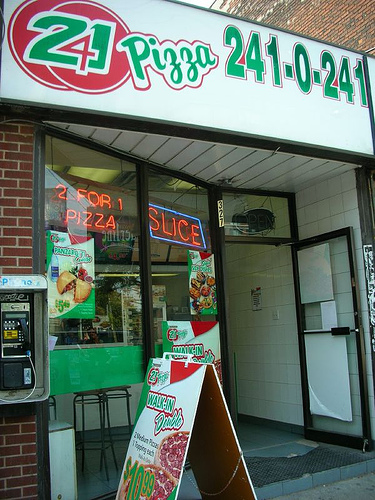
Other numerical combinations can communicate an idea.
For example:
- 2-4-1 can represent “two for the price of one.”
These examples demonstrate an important principle: a vanity number works when people can understand or reconstruct the pattern easily. (Wikipedia)
Why Are Vanity Phone Numbers Easy to Remember?
The main advantage of vanity phone numbers is not that they change how a call works. They change how easily people can recall the number.
A random sequence such as 482-7316 does not provide much information to help your memory.
A number with a recognizable pattern gives your brain something to connect with.
For example:
Random: 482-7316
Pattern-based: 967-1111
Meaning-based: a number connected to a city, service, date, frequency, or another familiar idea.
The second and third examples provide additional memory cues.
This is particularly useful when someone hears a number rather than seeing it written down.
Why Use a Vanity Number for Business?
A vanity number for business can be useful when customers need to remember the number without immediately saving it.
This is particularly relevant for businesses that use:
- Radio advertising
- Outdoor advertising
- Printed advertisements
- Vehicle branding
- Packaging
- Flyers and brochures
- Podcasts
- Television advertising
- Word-of-mouth recommendations
A customer looking at a website can simply tap a phone number. Someone driving past a business sign cannot.
That is where memorability becomes more valuable.
1. Easier Recall
The biggest benefit is simple: customers have a better chance of remembering a meaningful number than a random sequence.
2. Stronger Association
A word or recognizable pattern can connect the phone number with the business, service, location, or message.
3. Consistent Offline Branding
A memorable number can appear repeatedly across vehicles, signs, advertisements, packaging, and other marketing material.
4. Useful for Call-Based Businesses
Businesses that depend heavily on incoming calls may have more reason to invest in a memorable number than businesses that rarely communicate with customers by phone.
However, a vanity number is not a replacement for good marketing, customer service, or a strong product. Its main job is to make the contact number easier to remember.
Vanity Number vs Regular Phone Number
The technical difference between a vanity number and an ordinary phone number is usually very small.
The main difference is how the number is selected and presented.
| Feature | Regular Phone Number | Vanity Number |
| Number selection | Often assigned | Deliberately selected |
| Memorability | May be random | Designed to be memorable |
| Can spell a word | Sometimes | Often |
| Can use patterns | Sometimes | Common |
| Business branding | Limited | Stronger potential |
| Can be local | Yes | Yes |
| Can be toll-free | Yes | Yes |
A vanity number is therefore better understood as a memorable version of a regular telephone number, rather than a completely different type of telephone service.
Vanity Number vs Fancy or VIP Mobile Number
The terms can overlap, but they are not always used in exactly the same way.
A vanity number generally focuses on memorability. It may spell a word or contain a recognizable pattern.
A fancy or VIP mobile number usually focuses on a desirable numerical combination.
For example, a mobile customer may prefer:
98XXXX8888
because of the repeated 8s.
That makes it a custom telephone number or premium mobile number, even though it does not spell a word.
In other words:
Every memorable mobile number can be personalized, but not every personalized number is necessarily a phoneword.
How to Find a Vanity Number
If you want to find vanity number options, start with the idea you want the number to communicate rather than immediately searching for a specific number.
1. Decide What You Want the Number to Represent
Think about:
- Your business name
- Your service
- Your location
- A short keyword
- A memorable phrase
- A repeated number
- A meaningful date
- A simple numerical pattern
A short, obvious idea is usually easier to turn into a memorable number.
2. Convert Words Into Digits
Use a standard telephone keypad to convert your preferred word into numbers.
For example:
TAXI → 8294
Then check whether the complete number is available from the relevant provider.
3. Create Several Alternatives
Your first choice may already be assigned.
Instead of creating only one option, prepare several alternatives.
For example, if your preferred word is unavailable, consider:
- A shorter related word
- A combination of two short words
- A word plus a meaningful number
- A repeated-digit pattern
- A local area code with a memorable ending
4. Check Availability
Availability depends on the type of number you want.
A toll-free number, local number, and mobile number may come from different numbering pools and have different availability rules.
The provider or telecom operator can tell you whether the desired number is available.
How to Get a Vanity Number
The exact process for how to get a vanity number depends on whether you want a toll-free, local, or mobile number.
A general process looks like this:
Step 1: Choose the Type of Number
Decide whether you need:
- A vanity toll-free number
- A vanity local number
- A mobile or custom cell phone number
- Another type of business telephone number
Your customer base and intended use should guide this decision.
Step 2: Choose a Word or Number Pattern
Create several possible words, phrases, or numerical patterns.
Do not rely on only one option because memorable combinations are often already taken.
Step 3: Check the Number on a Provider’s Platform
Use the provider’s number search or availability tool.
Enter your preferred digits, word, area code, or pattern where supported.
Step 4: Compare Available Options
If your first choice is unavailable, compare alternatives based on:
- Memorability
- Relevance
- Length
- Ease of pronunciation
- Ease of dialing
- Local relevance
Step 5: Complete the Registration Process
Once you select an available number, follow the provider’s process for registering or activating it.
Requirements can vary depending on the country, number type, and telecom provider.
Step 6: Test the Number
Before putting the number on advertisements or business materials, call it from another phone and make sure it reaches the intended destination.
How to Buy a Vanity Number
If you’re wondering how to buy a vanity number, the first thing to understand is that “buy” does not always mean permanent ownership.
Depending on the country and number type, a telephone number may be assigned, rented, leased, or otherwise provided under the terms of a telecom service.
Before paying for a memorable number, check:
1. Monthly or Recurring Charges
A premium number may cost more than an ordinary number. Look at the ongoing cost, not just the initial activation fee.
2. Availability
A highly memorable combination may already be assigned.
3. Portability
If you change providers later, check whether you can port the number.
4. Cancellation Terms
Understand what happens to the number if you stop using the service.
5. Number Type
Make sure you are getting the type of number you actually need, whether local, toll-free, or mobile.
6. Premium Pricing
Some particularly desirable numerical combinations may command higher prices because they are scarce.
The key is to judge the number based on how useful it is to you rather than simply paying more because a number looks rare.
Are Vanity Phone Numbers Still Useful?
Yes, but their usefulness depends on how customers contact a business.
Digital channels have changed the way people interact with companies. On a smartphone, a customer can tap a phone number instead of remembering it.
That makes memorability less important in some digital situations.
However, vanity phone numbers can still have a practical role when the number is communicated through channels where customers cannot simply tap it.
For example:
- Radio
- Billboards
- Vehicle advertisements
- Printed materials
- Podcasts
- Television
- Word of mouth
In these situations, a memorable number can reduce the gap between hearing the number and remembering the number later.
Conclusion
A vanity number is not simply a phone number that looks fancy.
It is a number chosen with one goal in mind: make it easier for people to remember and use.
That can happen through a word, a repeated sequence, a local connection, a meaningful number, or another pattern that gives people something to associate with the digits.
The real examples documented by Wikipedia make this clear. Numbers such as 313-DETROIT, 967-1111, 1-800-800-8000, 872-1010, and numbers connected to 20/20 or 24/7 use different techniques, but they all follow the same principle: give people a reason to remember the number. (Wikipedia)
If you are trying to find vanity number options, start by thinking about what you want the number to communicate. Then compare word-based and numerical patterns, check availability, understand the cost and portability terms, and choose the combination that your customers can remember without much effort.