
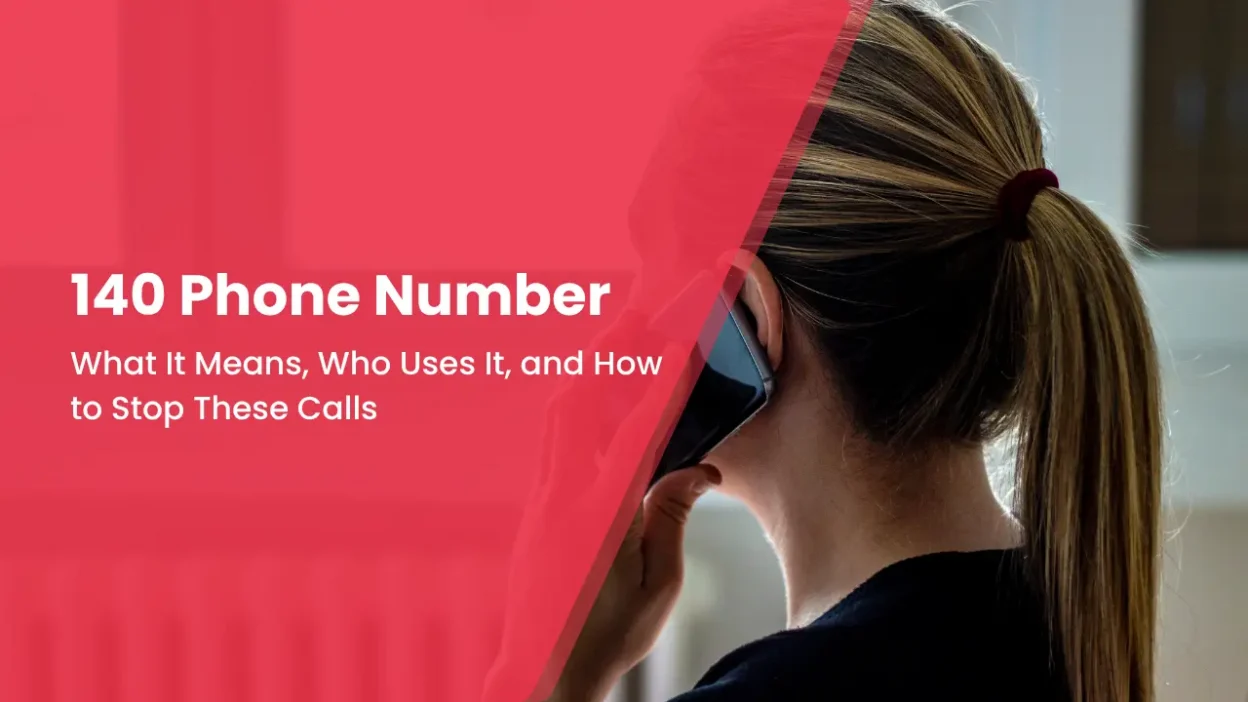
Have you ever received a call from a number starting with 140 and wondered, “Who is calling me, and should I answer?”
- 1 What Is a 140 Phone Number?
- 2 Why Am I Getting Calls From a 140 Phone Number?
- 3 Is a 140 Phone Number Safe or Is It Spam?
- 4 Are All Calls From 140 Promotional Calls?
- 5 140 Phone Number vs 1600 Series: What’s the Difference?
- 6 Can I Block a 140 Phone Number?
- 7 How to Stop Calls From a 140 Phone Number
- 8 Can You Call Back a 140 Phone Number?
- 9 What Does a 140 Starting Phone Number Mean for Businesses?
- 10 How Can a Business Get a 140 Phone Number?
- 11 What Happens If a Business Uses a Regular Number for Promotional Calls?
- 12 What Is the Difference Between a 140 Number and a Normal Mobile Number?
- 13 140 Phone Number: What Consumers Should Remember
- 14 Conclusion
You are not alone.
A 140 phone number looks different from a regular mobile number, which naturally makes people curious. Some assume it is a spam number, while others worry that it could be a scam.
The reality is simpler.
A number starting with 140 is part of a numbering series designated for promotional calls under India’s telecom regulations. It helps consumers identify commercial calls and gives them control over whether they want to receive them.
In this guide, you’ll learn what a 140 phone number means, why businesses use it, whether you should answer one, how to stop unwanted 140 calls, and how businesses can use the 140 series for promotional calling.
What Is a 140 Phone Number?
A 140 phone number is a number from the 140xx series designated for promotional voice calls in India.
TRAI has designated the 140 series so that promotional calls can be separated from other types of commercial and personal communication. Businesses that want to make promotional calls using this series must register with a telecom service provider and follow the applicable TCCCPR requirements.
So, when you see a phone number starting with 140, it generally indicates that the call is promotional or marketing-related.
For example, you may receive a 140 call about:
- A credit card or loan offer
- An insurance plan
- A telecom or broadband offer
- A new product or service
- A property or real estate offer
- An education or course promotion
- A sales campaign or customer offer
The important point is that 140 identifies the type of calling, not whether you personally want the call.
Why Am I Getting Calls From a 140 Phone Number?
The most common reason is simple: a business is trying to promote a product, service, offer, or campaign.
For example, a bank may call about a credit card offer. An insurance company may contact you about a policy. A telecom company may promote a new plan.
The 140 series was created to make promotional calling more identifiable instead of allowing businesses to use ordinary-looking numbers for large-scale commercial calling.
TRAI’s current framework requires commercial communication to use registered resources and designated numbering series where applicable.
So if you receive a call from a 140 starting phone number, you can usually identify it as a promotional call before deciding whether to answer.
Is a 140 Phone Number Safe or Is It Spam?
A 140 phone number is not automatically a scam or spam number.
The 140 series is a designated series for promotional calls. However, that does not mean you should automatically trust everything a caller says.
Think of it this way:
140 tells you what type of call it is. It does not tell you whether the offer is right for you.
If you receive a legitimate promotional call, the caller may explain an offer, product, plan, or service.
But you should still follow basic safety rules.
Never share sensitive information such as:
- OTPs
- UPI PINs
- ATM or debit card PINs
- CVV
- Internet banking passwords
- One-time login codes
If someone asks you to share sensitive financial information or transfer money during a call, stop the conversation and contact the organisation through its official customer-care channel.
Are All Calls From 140 Promotional Calls?
The 140 series is designated for promotional calls.
This is different from service and transactional communication.
For example:
Promotional call:
“Would you like to apply for our new credit card?”
Service call:
“Your existing insurance policy is due for renewal.”
Transactional call:
“Your payment has been received.”
The regulatory framework separates these types of communication because they serve different purposes. TRAI’s 2025 amendment defines promotional, service and transactional voice calls separately and requires commercial communication to use registered resources or special series assigned for the relevant purpose.
140 Phone Number vs 1600 Series: What’s the Difference?
This is one of the most common points of confusion.
| 140 Series | 1600 Series |
| Used for promotional calls | Used for service and transactional calls |
| Used by entities across sectors for promotional calling | Used for designated service/transaction communication |
| Helps identify marketing calls | Helps identify important service-related calls |
| Consumers can manage promotional preferences through DND | Different regulatory treatment applies |
| Example: loan or product promotion | Example: certain banking or government service calls |
TRAI’s July 2026 clarification states that 140xx is used for promotional calls by entities of any sector, while 1600xx is designated for service and transaction calls by regulated BFSI entities and government-to-citizen communication.
This distinction is useful because you don’t have to treat every commercial call in the same way.
Can I Block a 140 Phone Number?
Yes.
You can manage promotional calls through the Do Not Disturb (DND) registry.
TRAI allows consumers to register their preferences and choose whether they want to receive promotional communications from particular categories or block them. You can register or modify your preferences through 1909, the TRAI DND app, and other approved channels.
This means you don’t necessarily have to block every promotional call.
For example, you may want to receive banking offers but don’t want calls related to real estate or education.
You can manage your preferences according to the categories available through the DND system.
How to Stop Calls From a 140 Phone Number
If you are receiving too many promotional calls, you have a few options.
1. Register for DND
You can register or change your commercial communication preferences through:
- 1909
- The TRAI DND app
- Your telecom operator’s approved app or website
- Other methods provided through the DND system
TRAI currently confirms that consumers can use 1909, the DND app, or other approved methods to register and modify their preferences.
2. Choose the categories you want to block
You don’t always need to stop every promotional communication.
Depending on your preference, you can choose categories of commercial communication that you do not want to receive.
This can be more useful than blocking everything.
3. Report unwanted promotional calls
If you receive promotional communication that violates your registered preferences, you can report it through the appropriate complaint mechanism.
TRAI states that consumers can make complaints through their service provider, 1909, or the DND app.
Can You Call Back a 140 Phone Number?
A 140 number is primarily intended for outbound promotional calling, so you should not assume that it works like a normal customer-care number.
If you miss an important-looking call, don’t rely on calling the 140 number back.
Instead, find the company’s official website, customer-care number, or app and contact the business through that channel.
This is also a safer approach if you are unsure about the identity of the caller.
What Does a 140 Starting Phone Number Mean for Businesses?
For businesses, the 140 series is more than just a caller ID.
It is part of India’s regulatory framework for commercial calling.
Businesses that want to make commercial communication through telecom networks need to register with an access provider and follow the relevant requirements under TCCCPR. TRAI’s 2025 amendment also requires commercial communication to use registered headers or number resources from special series assigned for commercial communication.
For promotional voice calls, the 140 series is the designated route.
This is particularly relevant for businesses running:
- Sales campaigns
- Lead-generation campaigns
- Customer acquisition campaigns
- Promotional offers
- Product launches
- Telemarketing campaigns
- Large outbound calling campaigns
How Can a Business Get a 140 Phone Number?
Getting a 140 series number is not the same as purchasing an ordinary mobile or virtual number.
A business needs to follow the applicable telecom registration and compliance process.
The basic process looks like this:
Step 1: Register the business
The business needs to register with a telecom service provider under the applicable commercial communication framework.
Step 2: Complete the required verification
The business provides the required business and identification information during registration.
Step 3: Apply for the appropriate number series
Once the required registration is completed, the business can work with its telecom provider or authorised telecommunication partner for the appropriate 140 series number.
Step 4: Connect the number with your calling system
Businesses can connect their approved calling number with their business telephony infrastructure, depending on the solution and provider.
This can include systems such as:
- Cloud telephony
- Call centre software
- Auto dialers
- CRM integrations
- Call recording
- Call analytics
Step 5: Follow DND and other compliance requirements
Getting the number is only one part of the process.
Businesses also need to follow the applicable customer preference, consent, registration, calling and complaint-handling requirements.
TRAI’s regulations require traceability and allow action against entities that violate the commercial communication framework.
What Happens If a Business Uses a Regular Number for Promotional Calls?
Using an ordinary mobile number for commercial calling can create compliance problems.
TRAI’s current guidance states that businesses sending commercial communication through telecom resources must meet the prescribed regulatory requirements, and TRAI specifically states that mobile numbers should not be used for telemarketing activities.
The purpose of the designated series is to make commercial communication more identifiable and accountable.
For a business, using the correct number series can therefore be an important part of its outbound calling strategy.
What Is the Difference Between a 140 Number and a Normal Mobile Number?
The biggest difference is purpose and regulation.
A normal mobile number can be used for personal communication and other permitted uses.
A 140 series number is specifically designated for promotional calling.
This makes it easier for consumers to recognise that they are receiving a marketing call rather than an ordinary personal call.
140 Phone Number: What Consumers Should Remember
If you see a phone number starting with 140, don’t immediately assume it is a scam.
Remember these three things:
140 = promotional calling
DND = your way to manage promotional preferences
140 does not mean you should share sensitive information
If you are interested in the offer, you can listen and make your own decision. If you don’t want promotional calls, use the DND system to manage your preferences.
Conclusion
A 140 phone number is not just another unknown number appearing on your screen.
It is part of India’s system for identifying promotional calls.
For consumers, the 140 series makes it easier to recognise marketing calls and manage them through DND. For businesses, it provides a regulated route for promotional calling when the required registrations and compliance processes are followed.
So the next time you see a phone number starting with 140, you’ll know what it means: it’s a promotional call, not automatically a scam.
If you don’t want such calls, manage your preferences through DND. If you are a business planning large-scale promotional calling, make sure your calling setup follows the applicable TRAI requirements before you start.