
Summary-
In real call center setups, problems rarely come from customers alone. They come from scattered conversations. A customer sends a message on WhatsApp, follows up on email, and then calls because nothing seems connected. Agents try to help, but they only see pieces of the story. This article is written around that everyday gap.
It shows how omnichannel communication fixes the mess by keeping every interaction in one place, so nothing slips through. You’ll see how this changes daily support work, reduces back-and-forth, and makes responses feel more confident and complete. It also touches on why connected systems matter as teams grow and customer expectations keep rising.
Introduction-
Customers today don’t think in terms of channels. They simply want help. A conversation might start on chat, continue over a phone call, and later move to email. From the customer’s point of view, it is all part of the same problem and the same discussion. Unfortunately, many call centers still treat these touchpoints as separate interactions. This often results in customers repeating the same issue, agents missing important context, and delays that create frustration.
Over time, this disconnect affects trust. Omnichannel Communication helps solve this gap by bringing all customer conversations into one connected system. It allows support teams to respond with full context and continuity. In this blog, we will look at how Omnichannel Communication benefits a call center and makes customer support smoother, faster, and more reliable.
What Is Omnichannel Communication in a Call Center?
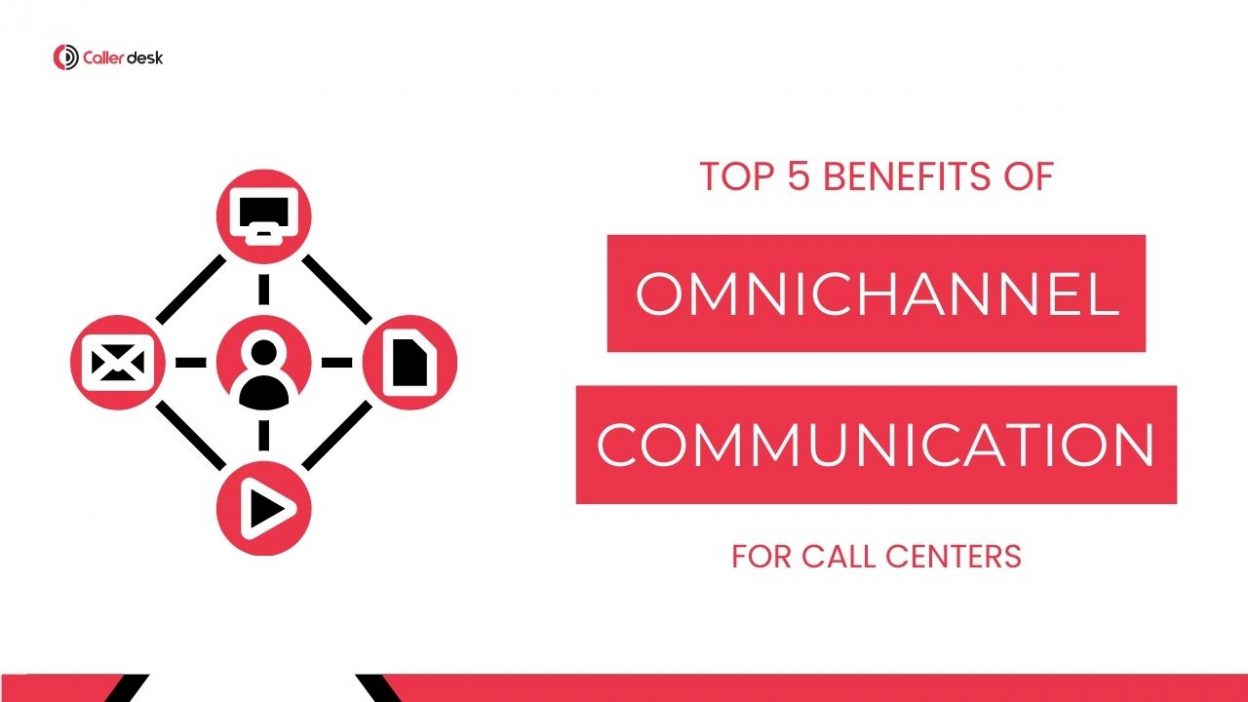
Omnichannel Communication refers to a support setup where all customer interactions are handled together instead of in isolation.
This includes communication through phone calls, WhatsApp, SMS, emails, live chat, and social media platforms.
Rather than treating each message or call as a new case, the entire interaction history is carried forward. This creates a continuous customer journey where every conversation feels connected and informed.
1. Seamless Customer Experience
How this helps customers:
- Customers can start a conversation on chat and continue it on a call
- Previous conversations are already visible to agents
- Customers do not need to repeat the same issue
- Interactions feel smooth and connected
- Support feels more personal and attentive
- Customers feel respected and valued
2. Faster Response Time
How this improves response speed:
- All customer queries appear in one dashboard
- No messages are missed across channels
- Agents can prioritise urgent requests easily
- Less time is wasted switching between tools
- Customers receive quicker responses
- Waiting time is reduced significantly
3. Improved Agent Productivity
How this helps agents work better:
- Customer history is available on one screen
- Agents understand issues without extra questions
- Less manual effort is required
- Calls and messages are handled with confidence
- Daily workload feels more manageable
- Agent stress levels are reduced
4. Consistent Communication Across Channels
How this improves communication quality:
- All agents see the same customer information
- Conflicting responses are avoided
- Information shared with customers stays accurate
- Brand messaging remains consistent
- Customer confusion is reduced
- Trust in the call center increases
5. Personalised Customer Support
How this makes support more personal:
- Customers are recognised instantly
- Past interactions guide the conversation
- Repeated questions are avoided
- Responses feel relevant and thoughtful
- Customers feel understood, not ignored
- Conversations feel human, not scripted
6. Better Customer Insights
How this helps decision-making:
- Preferred customer channels are identified
- Common customer issues are tracked
- Peak support hours become clear
- Agent performance patterns are visible
- Training needs are identified easily
- Service quality improves over time
7. Higher Customer Satisfaction
How this improves customer satisfaction:
- Issues are resolved faster
- Customers do not repeat themselves
- Support interactions feel smooth
- Frustration during conversations is reduced
- Positive experiences increase loyalty
- Customers are more likely to recommend the brand
8. Improved Operational Efficiency
How this helps managers and teams:
- All communication channels are monitored together
- Agent activity is tracked easily
- Bottlenecks are identified quickly
- Workflows remain organised
- Team coordination improves
- Daily operations run more smoothly
9. Easy Scalability for Growing Call Centers
How this supports business growth:
- New channels can be added easily
- Increased call and message volume is handled well
- New agents are onboarded faster
- Systems remain stable under pressure
- Expansion does not create confusion
- The call center stays future-ready
10. Strong Competitive Advantage
How this helps businesses stand out:
- Customer support feels modern and efficient
- Service quality is better than competitors
- Brand reputation improves naturally
- Customers prefer the experience
- Long-term customer retention increases
- Business growth becomes sustainable
Conclusion-
For today’s call centers, omnichannel communication is no longer something nice to have. It has quietly become a basic requirement. When all customer conversations are connected in one place, many common problems start disappearing on their own. Customers do not feel ignored or confused. Agents are able to work with better clarity.
Managers can finally see what is really happening across teams and channels. Most importantly, support feels smoother and more reliable for customers. Call centers that adopt omnichannel communication are better prepared to handle growing expectations and changing customer behaviour. If your goal is to build a call center experience that feels connected and dependable, you can explore how this approach is implemented in real-world setups at callerdesk.io.